
The Concept of Character in Old Buildings
Julian Holder
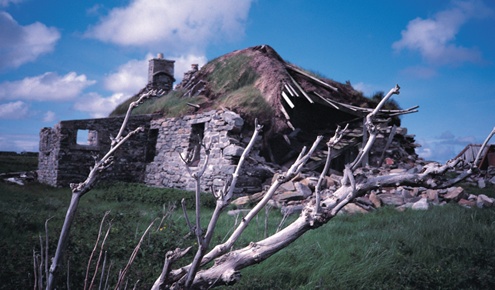 |
Character, like so many of the central concepts we use on a daily basis in conservation, is a somewhat nebulous one. It is also one we rarely stop to think about in abstract. Not only is it hard to define but it shares with related concepts such as integrity and honesty, a family resemblance by employing what Ruskin termed ‘the pathetic fallacy'. That is to say we apply concepts properly belonging to human beings to inanimate objects. Can a building really be ‘compromised,’ its ‘integrity’ questioned, its ‘character’ altered? It all rather conjures up the image of a shy Edwardian bather embarrassed to be caught half-way through changing into a swim-suit in a bathing engine on the South Coast.
When using these concepts we ask those reading our letters of objection, our proofs of evidence, and our conservation plans, to take them on trust and engage in a debate partially defined, controlled, and organised around such anthropomorphic concepts. To accept the concepts ensures that all the participants are already treating buildings as people, as living breathing beings, whose fate we care about, and not simply as bricks and lime mortar.
At its best this is a linguistic sleight of hand, based on custom and practice going back to Ruskin, Morris and other members of the Arts and Crafts Movement. It is a direct, and frequently effective appeal to the emotions of those who make decisions in planning committees up and down the land. At its worst it is a transparently bullying misappropriation which fails to impress the hard headed and leaves conservation looking distinctly amateur.
 |
|
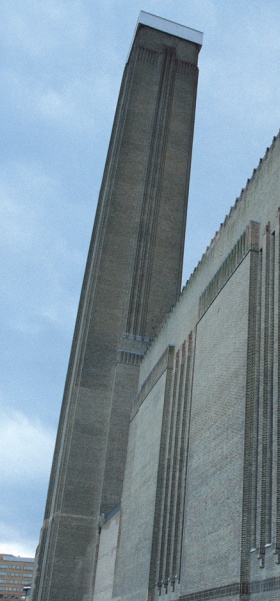
| The conversion of the former Bankside Power Station, London, into the Tate Modern could not have been achieved without considerable alteration to its character. Yet it represents a building type excluded from traditional notions of architecture until after the Industrial Revolution. |
However, if we take the human analogy at face value perhaps it is not so inappropriate. We are perturbed when a person’s character changes out of all recognition and we no longer know who they are. Character, at least for human beings, is meant to be fixed and stable, something we ‘settle into,’ and any alteration of this, unless, as in literature, the redemption of a bad character, is seen as unfortunate. So it is for buildings. We believe that we know them, their age, their history, their appearance. Should this change as a result of new research, possibly leading to a new appearance then we feel let down, sometimes confused, and even angry. Sometimes, as we learn more we value more – a building is upgraded, a friend more valued. Yet it works both ways. How often do we say of a person that ‘such-and-such’ an event, usually a new partner or new interest following a death, has ‘been the making of them’. Such may be the defence of some high profile restorations such as that of Stirling Great Hall, or the recovery of the original interior paint scheme at Bolsover Castle. However, like all concepts, ‘character’ is historically constructed and has its own history.
In his recent work Words and Buildings, Adrian Forty has performed a valuable service in clarifying the historical development of many central concepts in architecture. In so doing he chronicles the development of the closed language of contemporary architecture which has alienated the architectural profession from the public it serves. Many of these, such as ‘character’, are as applicable to conservation as they are to architecture. Interestingly, the use of such concepts in conservation has not alienated us from the public in the way that their use in the development of modernist architecture has. Why should this be? How has the architectural avant-garde managed to use the same concepts to exclude the public that conservation seems to have deployed to include them?
Forty argues that ‘character’, with a background in literary debate, entered the architectural vocabulary in the 18th century, being found first in the writings of French architect Germain Boffrand, such as Livre d’Architecture (1745). For Boffrand the concept of ‘character’ was clearly related to function, or genre, as when he writes that “Different buildings, by their arrangement, by their construction, by the way they are decorated, should tell the spectator their purpose'. This definition, which sounds almost Modernist, seems at odds with how we use the concept today when few would worry about a building such as Chatelherault where a kennel and stable block is given something of the form of a Palladian villa.
Yet what Boffrand does point to is the assumption, implicit in the concept of ‘character’, that there is a truthful, or honest part of a building, a character based on function which should be expressed. Whilst it may be possible to use Boffrand’s concept of ‘character’ to deal with buildings up until the mid 18th century, thereafter it is an enterprise fraught with danger. Why? Because under the influence of the Industrial Revolution, the expansion of the population, the development of the State, and the increasing concentration of capital in the hands of a few, the stability of the few core building types – church and manor house, cathedral and palace – became challenged by the factory and the need for mass housing.
As a result, what buildings meant and how they could be read in functional terms underwent a profound change from which they have never recovered. Meaning was a problem that John Ruskin felt acutely when he wrote of his despair at the fate of the Gothic Revival being used for Victorian gin-palaces. Character then, for Boffrand, meant learning the established forms and decoration for a set number of building types so that their function and status could be learnt, deployed as necessary, and then be readily identified. It was a practice closely allied with the Classical language of architecture where particular orders, and their meaning, could be used to emphasise the character and function of a building – Doric used to characterise a powerful building dedicated to a God, Corinthian a delicate building dedicated to a young Goddess. Shortly after Boffrand’s initial attempt to pin down the meaning of character, J-F Blondel’s Cours d’Architecture of 1766 developed Boffrand’s concept by defining 64 building genres, with 38 different characters. Necessarily, such a mechanistic approach was also doomed to failure from the start, despite acknowledging a wide variety of characters.
With a wider view of what constitutes architecture, we now appreciate that character can be changed so easily its varieties are almost infinite such that Boffrand’s attempt to clarify ‘character’ seems inadequate, and indeed unnecessary. To read such subtle alterations in character calls for a high level of visual acuity which, if we are not careful, can label us as remote, other-worldly cranks who are obsessed by minor details. Yet all too often it is the details which contribute the essential elements to our reading of character. A new door on a small terraced house as at Wirksworth, a new window inserted in a previously blank wall on a house in Chelsea, a change in roof height on a railway station in Edinburgh, or a new development allowed within the curtilage of a church in Herefordshire can all conspire to change the character of a building or site that is, or should be, protected and passed on to future generations as an authentic record of the past.
 |
|
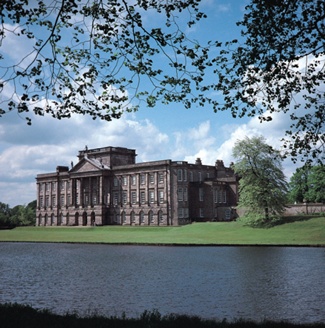
| Lyme Park, Cheshire, its classical façade by G Leoni was completed at a time when the definition of‘Architecture’ was restricted to high status buildings, and character was understood as function |
Hard enough to control on listed buildings, in conservation areas only the Draconian step of Article 4 directions, followed up with enforcement action, can hold back the slow tide of ill-informed alterations. Conservation areas are probably one of the most popular aspects of conservation for the majority of the public. Here examples like the Roe Green Estate in Kingsbury, north London, shine out like a beacon in the darkness to demonstrate what can be done to revive the character of an early 20th century housing estate and allow us to value one of the most neglected and despised building types – council housing.
‘Character’ is what we are trying to save – and it is inbuilt, not applied. More perhaps than the great Burra Charter shibboleth we are all meant to bow down before at present – ‘cultural significance’ – character is crucial, and it is crucial to cultural significance. However the complexity of the concept starts when we begin to consider which character we are seeking to conserve on any particular building, or area. Is it its original character – in which case are we right to demolish later additions or alterations? Or is it all the complex accretions of a building over time? And what of the repairs necessary to arrest decay and maintain the character of the original? Do we disguise some of these to maintain the character of the building we care for? Or are we content to let ‘time and tide’ take its inexorable toll on the building and weather new elements back to the old?
Beyond the historical conception of character as related to meaning, in terms of the ‘plain-language’ school of philosophy, character also seems to be implicitly related to age. If you don’t believe this try a simple test: to what extent can a new building be said to have ‘character’ – beyond that of ‘fatal newness’ (as Ruskin put it)? So, character gives a privilege to the older building in the same way that guidelines for listing do. Not only does old usually mean scarce, but it also means baring the signs of that age on its fabric.
If this is so, it is something which the dominant philosophy of conservative repair, and especially SPAB principles, conspires with. Minimal intervention argues that as much of the original fabric of a building as possible is saved. These will be the elements which carry the marks of age, not merely the marks of the tooling, but of the weathering, decay, and consequent repair of the fabric. It raises the interesting issue of the restoration of Modern Movement buildings. In The Architects’ Journal several years ago I asked the rhetorical question 'Would you pay good money to visit the rusting remains of a Modern Movement building?' Probably not. Yet the day may be coming closer when this happens. For a younger generation of conservation students, a building such as Gillespie Kidd and Coia’s Cardross Seminary can be viewed as a great ruin, a thought not too abhorrent to its chief designer. If an increased emphasis on the manipulation of space is one of the defining characteristics of Modernism can this be appreciated if Cardross were left as a ruin, or Brynmawr, or Bankside Power Station? Certainly it is the sheer volume of the great Turbine Hall of Bankside, now celebrated as the Tate Modern, which seems to have impressed most visitors and much of the building's essential character was retained in the recent conversion until they stuck an internally lit hat on top and turned the symbol of its former function into an artist’s flagpole.
 |
|
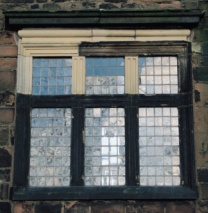
| Stone repair to a window in Carlisle. Can we wait for the age‑related character of the new repair to happen naturally or should the new stone be soot‑washed to tone in with the old? |
But it is not only Modern Movement buildings that raise this question, it is also inevitably subject to local policies. In London it has been thought acceptable to gently soot-wash brick repairs to the parapets of Georgian terraces in order to blend the repair in with the original work. The justification can only be to retain the sense of the original character, and of that character being based on age and the accumulation of soot – a view of which Riegl would perhaps have approved. However, in Edinburgh indented stone repairs are deliberately left in their new state to contrast with the older stone. What is at issue here seems to be a desire for an instant heritage which cannot wait for ‘time and tide’ to mellow repairs. Recent research in support of stone cleaning has established that, whilst people (and for once we are not talking about the conservation fraternity talking to itself) like buildings to be cleaned, they do not like them too clean – some patina of age is necessary it seems for old buildings to become old, revered and develop character. Once again this seems unlikely to be the case with buildings of the Modern Movement whose materials age in a way still largely unappreciated by the public. Furthermore, where buildings of the Modern Movement are concerned, the shock of the new can be confusing – the recently restored Sonneveld House, Rotterdam (1933) for example. Once cleaned these buildings pose all too clearly that perennial question ‘What time is this place?’
Clearly the concept of character, as
historically constructed in 18th and 19th
century architectural discourse, has little point
of contact with us today. Forms have long
lost their meaning and their attachment to a
narrow and high-culture set of building types.
The deliberate attempt to eliminate character
from modern architecture in the 20th century
has partially resulted in the concept being
taken over by the conservation movement and
used to defend our diminishing stock of
old buildings against the wrecker’s ball. But
with the challenge of the conservation of
20th century buildings of non-traditional
appearance and materials, we will need to
think about it far more carefully in the
future. Ironically, having wrested the concept
of character from contemporary architecture
during the last century, we are perhaps now in
the situation where we need to borrow some
other concepts, still current in contemporary
discourse, in order to defend Modernist
buildings. If Modernist buildings of the 20th
century no longer have character in the way
that those of traditional design and materials
have what concepts do we use to defend them?
Recommended Reading
Adrian Forty, Words and Buildings: A Vocabulary of Modern Architecture, Thames & Hudson, London, 2001
Kristine Ottesen Garrigan, Ruskin on Architecture: His Thought and Influence, University of Wisconsin Press, Madison, 1973
John Summerson, The Classical Language of Architecture, Thames & Hudson, London, 1980
John Onians, Bearers of Meaning: The Classical Orders in Antiquity, the Middle Ages, and the Renaissance, Cambridge University Press, Cambridge, 1988
Peter J Larkham, 'Conservation and Management in UK Suburbs', in, R Harris and PJ Larkham (eds), Changing Suburbs: Foundation, Form and Function, Spon, London, 1999
Alois Riegl, The Modern Cult of Monuments: Its Character and its Origins, reprinted in Oppositions, no 25, 1982, special issue on Monument/memory and the mortality of architecture
Robin Webster, Stone Cleaning and the Nature, Soiling and Decay Mechanisms of Stone, Donhead, London, 1992