
Time and the Conservation of Paintings
Francis Downing
 |
 |
|
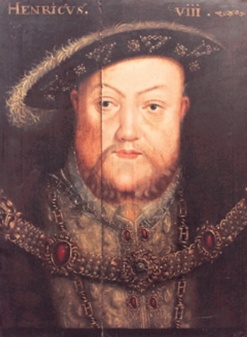
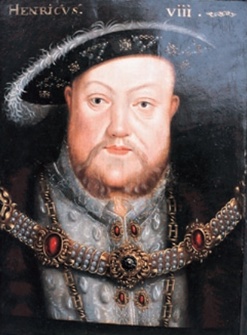
| Painting on board before and after repair | ||
Ironically, few things today are changing as rapidly as our views on conservation. According to ECCO (see the Recommended Reading section, below) 'conservation consists mainly of direct action carried out on cultural heritage with the aim of stabilising condition and retarding further deterioration'. 'Active' or 'hands on' conservation is commonly used to describe what is, in reality, a form of restoration.
The question is whether we should be 'hands on' conserving or restoring paintings at all? What should we do when ordinary conservation provides insufficient defence against the more serious effects of accidental damage and the passage of time? For example, what do we do when we have carefully placed a painting on the wall, away from direct sunlight, kept it protected from extreme cold, damp or heat, and even dusted it carefully, only to find that the varnish layer protecting the painting has become discoloured with age? What do we do when, even with gentle dusting, dirt still becomes so embedded that the image can no longer be fully discerned or enjoyed? And what do we do if the paint begins to seriously crack or flake?
There have been many different views over the years as to how we should approach 'hands on' conservation. One of the most prominent eras in the history of British art, the 19th century, focused on presentation and the visual image. When necessary, the painting would be put into the hands of a conservator or picture restorer who would do whatever he felt was required, take whatever action he felt appropriate and use the materials of his choice. He might not have been answerable for his materials or methods. Indeed, he may even have insisted that what he used and how he worked remained secret. For many this was acceptable; the mystery was even preferred. Often, questions would only arise if the picture restorer, by removing old dirt and layers of discoloured varnish, happened to reveal something that the Victorians might have found embarrassing. Nude figures, often present in Italian classical paintings, would have only just been acceptable, but certain exposed body parts or 'delicate' positioning of figures were more disconcerting, and it was not unusual for the restorer to be blamed for revealing too much.
This approach allowed restorers to use their own discretion and if, having removed dirt and old varnish, an embarrassing image was revealed, most restorers would have felt completely justified in painting over it or altering the image in some way, perhaps by the addition of a veil or a branch of a tree.
Since then, as our forebears' embarrassment with certain images gradually subsided and appreciation of all aspects of art grew, the painting itself took on greater importance. Today, clients also demand a much better understanding of exactly what a restorer, now better termed a 'conservator', does or uses or intends to use in his or her work. Some people now feel that historic paintings should not be touched at all, except for some gentle removal of dirt from time to time: if the varnish becomes so discoloured that it hides or distorts the image, then so be it. Even if the painting becomes damaged, advocates of this approach hold that the damage should be left as part of the painting's history. In other words, the cultural value of the image or what the artist was trying to convey is held in less importance than the cultural value of the painting as an 'artefact'.
Although in art this may be considered an extreme opinion, it is how an archaeologist might view a dilapidated 16th century castle. After all, a castle created for the practical purposes of protection and defence is in this respect redundant. Today, apart from appreciating its historical interest, we might see it as an example of the building skills of the time. A painting, on the other hand, is created by the artist as an illusion for the interest of the beholder, and today its components still function in the way intended by the artist. Of course with age it carries historical interest but an illusion is usually timeless, there to be enjoyed whenever we see it.
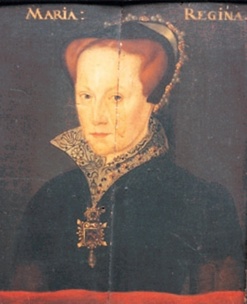
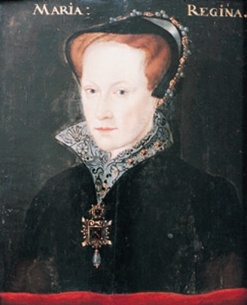
Dirt or discoloured varnish can distort that image, even flaking paint or damage such as a hole or tear can draw the eye away from the overall illusion and disharmonise the picture. One of the main aims of 'easel painting' conservation is to preserve and show a painting to its best advantage.
 |
 |
|
| Painting on board before and after repair | ||
THE STRUCTURE OF PAINTINGS
Paintings were and still are generally constructed on either canvas or wood panel covered with a plaster-based ground layer, upon which the drawing and paint is applied. This might be followed with fine painted glazes. Later, a number of months after the painting was completed, it might have been given at least one coat of a resin based varnish, not necessarily by the artist. This varnish gave an enriched appearance to the colours of the dried paint and helped to protect the paint surface.
Unfortunately, the resin varnish used traditionally is prone to discolouration over the years, even to the extent of disguising or diffusing the true colours of the paint beneath. Added to this problem is the accumulation of dirt ingraining itself within the surface of the varnish.
With age, the paint and varnish develop fine crazing or cracks, not always visible to the naked eye. The canvas, being hygroscopic, will absorb moisture from the air and dry out repeatedly, gradually shrinking over many years, and sometimes causing the paint to crack more seriously. Dirt can become embedded between the cracks causing the paint to lift. This drying out process is more prominent in warm, centrally heated atmospheres.
The amount of subsequent flaking depends on the quality of the canvas and the preparation used in the construction of the ground layers, but perhaps more particularly on the environmental conditions the painting is subjected to.
The first challenge for anyone charged with responsibility for a painting, be they owner, curator or conservator; is how to keep the painting in conducive conditions, that is to say, away from harmful sunlight, dust and damp, while also ensuring the atmosphere doesn't become too dry.
CONSERVATION TODAY
One of the many difficulties faced by administrators of historic houses and stately homes is how to maintain the fabric of the building and its contents and still keep the house amenable and inviting to visitors. After all, although visitor numbers and the admission fees may contribute to the survival of these houses, the consequent vibration, dust and dirt, and changes in humidity and temperature may be significantly responsible for the active deterioration of the building's fabric and its contents.
To attract visitors and ensure that they wish to return, the house must be kept warm, light, inviting and safe. The conservator must accept this situation and balance what he or she can do without adding to the problems by unnecessary interference.
Past restorers have also added to some deterioration by heavy restoration, poor quality work and sometimes using virtually permanent and, unknowingly, harmful materials.
So what difference is there in conservation today? It may seem a very basic step but the change in title from 'restorer' to the more appropriate term 'conservator' reflects a fundamental step in the right direction. It is a reminder to all, that the treatment of paintings is primarily about preservation and not re-vitalisation or any form of re-creation. The choice of materials, processes and reasons for their use must be considered carefully, discussed openly with all concerned and clearly recorded.
 |
 |
|
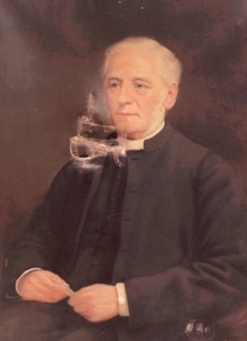
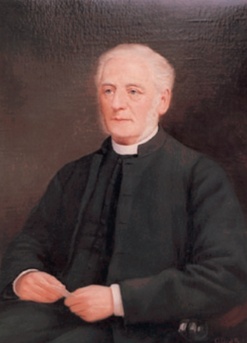
| Painting on canvas before and after repair | ||
While a painting may look 'better' for having been cleaned, it might not be considered restoration but simply a means of showing the painting as it really is, by removing the layers of dirt and discoloured varnish. The painting may then be revarnished for future protection, but this time using a synthetic resin that won't discolour with age.
In general, the higher the standard of artist, the more likely it is that he or she would have prepared the construction of the painting well, choosing and preparing a good support, whether canvas or panel. Equally, the more likely it is that the ground layer materials would have been prepared, mixed and applied with care, followed by the skilful application of a considered choice of paint.
These are the first and most important factors affecting the longevity of a painting. Future preservation is assisted or hampered by the quality of its original preparation.
The next factors affecting a painting's survival are the condition in which the painting has been kept over the years and how it has been treated. Needless to say, a well prepared painting is better armed to face fluctuating conditions. Because of poor preparation, many paintings from the 20th century will not survive the next 100 years.
Inconsiderate and poor conservation work carried out in the past can also cause serious problems for conservators today. For example, paintings lined with an additional canvas are often adhered with mixtures that turn the structure of paintings into virtual boards. Such techniques and the use of poor materials by conservators present a dilemma; whether to attempt to remove them and reverse the alteration to return the structure to perhaps a more relaxed original state with the risk that removing the materials may damage the painting, or to leave them alone, accepting that they may give an unfortunate or rigid appearance.
So, bad preparation, poor conditions, inconsiderate treatment and low quality conservation are the main problems facing today's ethically minded and conscientious conservator. Time itself is not the enemy but something that all involved in the preservation of paintings must work alongside and in partnership with.
In his book The Leopard, Giuseppe Tomasi di Lampedusa wrote that the credo of his part-fictional Sicilian prince was: 'Things must change in order that they remain the same'. In truth this accepts that time and its effects are inevitable, therefore in order to preserve stability, situations must adjust accordingly.
Similarly,
in one of her last published articles, the late Caroline Villars,
Director of the Department of Conservation and Technology at the
Courtauld Institute referred to conservation 'as a way of managing
change'. This is true. Conservation is about adapting to change.
To do so effectively, owners, administrators, curators and conservators
must all work together. Without help and good practices, paintings
will continue to be affected unsympathetically by time.
Recommended Reading
ECCO Professional Guidelines, European Confederation of Conservator-Restorers' Organisations, Brussels 2002 (see under 'About ECCO' at www.ecco-eu.org)