
Heritage Lottery Fund Applications
Colin Johns
 |
 |
|
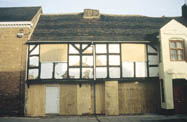
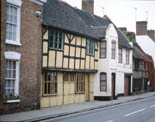
| 9-20 High Street, Kinver, rescued by the West Midlands Historic Buildings Trust. When acquired by the Trust, this Grade II listed building, which dates from the 16th century, was in a very poor condition (left) with unauthorised, badly constructed extension work behind. It has now been restored to residential use (right), removing an eyesore from the street scene. This project cost £200,000 and was assisted by a £64,000 grant from the Heritage Lottery Fund. | ||
It is difficult to discuss conservation projects today without making reference to the National Lottery: for some it has been the pot of gold at the end of the rainbow but for others simply a mirage. Whichever way you view it, one thing is sure; your application will have very little chance of success if you do not understand both the objectives of the Heritage Lottery Fund (HLF) and how the application process works. In this respect it has similarities with the planning system: you need to know the rules, but you also need to know how to present your case to the best advantage.
BACKGROUND
The National Lottery was established in 1994 to create extra funds for five 'good causes': heritage, arts, sports, charities and projects to mark the year 2000 and the beginning of the new millennium. An additional good cause, the New Opportunities Fund was added in October 1997.
In 1994 the five 'good causes' were each given 20 per cent of the lottery proceeds, but the figure was reduced to 16.6 per cent with the introduction of the New Opportunities Fund. The Government has recently announced that these allocations will remain for the next few years except that the New Opportunities Fund will inherit a further 16.6 per cent when the income to the Millennium Fund is curtailed.
With the introduction of the lottery it became necessary to find a mechanism to administer the new system, and for heritage projects this task fell to the Trustees of the National Heritage Memorial Fund who are responsible for the working of the HLF and the allocation of grants.
The original powers provided under the National Lottery etc. Act 1993 have been extended by the National Heritage Act 1997 and by New Directions provided in 1998 by the Secretary of State for Culture Media and Sport, which means that a wider range of projects can now be supported.
AIMS
The aim of the Heritage Lottery Fund is to improve the quality of life by:
- safeguarding and enhancing the heritage of buildings, objects and the environment, whether man-made or natural, which have been important in the formation of the character and identity of the United Kingdom
- assisting people to appreciate and enjoy their heritage
- allowing them to hand it on in sound condition to future generations.
WHO CAN APPLY?
Any organisation or individual may apply for awards from the Heritage Lottery Fund for a project which meets the criteria but HLF does not expect to make grants for projects concerning individual sites or buildings in private or commercial ownership.
Public and not-for-profit organisations are eligible including:
- those institutions and organisations funded by central government
- local authorities
- training and educational institutions
- charities
- friendly societies
- voluntary organisations.
As a minimum HLF expects applicants to have a constitution or a set of rules, and a bank or building society account.
GRANTS ALLOCATED 1995-1998
Since 1995 the HLF has committed over £1 billion to more than 2,000 projects across the UK. These are classified into separate heritage areas with the percentage allocations as follows:
- Museums, galleries and collections 45 per cent
- Historic buildings 29 per cent
- Countryside and nature conservation 7 per cent
- Historic parks 7 per cent
- Industrial, maritime and transport 7 per cent
- Archives and libraries 5 per cent
By number, 84 per cent of grants have been under £500,000 and 54 per cent under £100,000.
FUTURE RESOURCES
In its consultation paper of 1 October 1998 HLF indicated that its 1998/99 allocation of £280 million (the 16.6 per cent) is expected to fall to £218 million by the year 2001/2. Out of this allocation, the current £86 million for historic buildings and townscapes is predicted to fall to £53 million. The Fund is already significantly oversubscribed, (probably by a ratio of five-to-one) and, as the HLF extends it range of activities and the resources decline, the problem of over-subscription will worsen.
THE APPLICATION PROCESS
HLF publishes a comprehensive application pack which provides detailed information on all aspects of its policies and procedure. In addition, specific publications have been produced giving advice on:
- Conservation Plans for Historic Places
- Building Preservation Trusts
- Joint Grant Scheme for Churches or Other Places of Worship
The first step in considering an approach to HLF must be to obtain this information pack and read it carefully. The application form acts as a checklist and provides a useful precis for setting out a work programme. It is also useful to obtain the latest 'Lottery Update' which will advise of any changes in policy and procedures.
ASSESSMENT CRITERIA
Conservation is the first priority of the Heritage Lottery Fund. This reflects a concern articulated across all heritage sectors (and beyond) that the heritage of our country faces an escalating threat from social, economic and political pressures. Much of that heritage is not protected by legislation or by agencies who have statutory powers to support the heritage sectors.
A key role for the Heritage Lottery Fund is therefore to promote and support conservation. But it does not just do this to achieve the benefit of conservation alone. Conservation is the first stage in a process which moves seamlessly into the generation of direct public benefits from access and education, as well as indirect benefits from promoting regeneration, tourism, challenging social exclusion and alleviating social deprivation.
KEY ASSESSMENT CRITERIA ARE:
Importance of the project to the heritage Applicants should describe the particular importance of their project in local, regional or national terms. This may involve historical assessment and research: the stronger the case, the more likely it is to succeed. If a building is at risk, the degree of risk will be relevant and should be clearly assessed and stated. You will need a supporting statement from your local authority and you should ensure at an early stage that the authority fully understands your project and is in favour of its implementation.
Conservation benefits of the project You should explain how your project will help to preserve and enhance the building concerned, and a conservation statement is desirable. Major schemes, those over £500,000, will need to be supported by a conservation plan.
Access benefits of the project HLF aims to ensure that as many and as wide a range of people as possible will benefit from access, in the widest sense, to all the projects it funds. Applicants need to explain how their project will enhance physical or intellectual access to the heritage.
Additional public benefits You should explain what additional public benefits, over and above enhanced access, will be achieved. HLF looks for evidence that a project is supported by the local community and that it relates to local, regional or national plans or heritage policies. Social and economic benefits should also be stated.
Quality of design of the project Quality (of design and materials) is a key consideration in the assessment of all projects relating to the refurbishment of buildings and the creation of new ones. HLF will assess whether the work proposed meets appropriate standards of repair, conservation, or other relevant technical or professional skills, and whether it will be carried out by competent persons. The message here is to make sure that you have the right team and demonstrate your commitment to quality.
Financial need and viability Project costs are examined to establish that they are realistic and provide value for money. Partnership funding is required and must be sufficient to allow the scheme to proceed. As a general rule the matched funding requirement are 25 per cent for schemes over £100,000 and 10 per cent for those under. It is essential to show that there is a need for lottery funding; if a project could reasonably be expected to succeed without, then a grant will not be made. The applicant organisation's current financial position and likely ability to maintain the project in the long term are also important considerations. Full business plans are required for all projects costing more than £500,000.
Strengths of the organisation HLF will assess the strengths of the applicant organisation and whether it has the experience and capacity to manage the project both while it is being carried out and following completion.
Grants of over £5 million are defined by HLF as 'major heritage projects' Applications for these are assessed twice yearly in a competitive bid process held in December and mid-summer.
SPECIFIC PROGRAMME THEMES
In order to help focus resources on heritage targets which appear underfunded, or where resources could be strategically directed in concert with other agencies, HLF has developed a number of specific themes for grant making. Each theme has a ringfenced allocation, normally for a set period of years. Of these, the main building related programmes are Urban Parks, Joint Places of Worship and the Townscapes Heritage Initiative.
REGIONAL AND COUNTRY STRATEGIES
Up until October 1998 HLF has been an organisation based in central London, and seeking from there to fulfil its UK-wide remit. Since August 1997, however, staff dealing with the assessment of applications have been formed into separate teams, each covering applications from a particular part of the UK. HLF has opened offices in Edinburgh, Cardiff and Belfast.
Each grant made by HLF has an impact at local level. It is important, therefore, to assess the effect of HLF's grant making at local and regional levels in order to focus national priorities on the immediate problems and opportunities. The future intention is to develop an approach along regional lines and allow flexibility to respond to specific regional issues.
Access to the Heritage Lottery Fund is now the lifeline for many conservation projects, which without grant aid will simply fail. Until recently it was often possible to obtain funding from Cadw, English Heritage or Historic Scotland but these opportunities have been severely curtailed for most projects and the political pledges made in the past that lottery funding would be additional to existing funding, not a replacement for it look decidedly tarnished. This makes it even more necessary for applicant organisations and their professional advisers to fully understand the rules and philosophy of the HLF and to remember that applications will be assessed in competition, one with another. Unfortunately there can only be a limited number of winners but by carefully selecting and preparing your scheme and by fully understanding the process 'it could be you!'
Recommended Reading
Funds for Historic Buildings in England and Wales: A Directory of Sources, The Architectural Heritage Fund, London, 1998
For further information contact:
The Information and Publications Team, Heritage Lottery Fund, 7 Holbein
Place, London SW1W 8NR Tel 020 7591 6000 or visit www.hlf.org.uk