
On Guardianship
Rory Cullen
 |
||
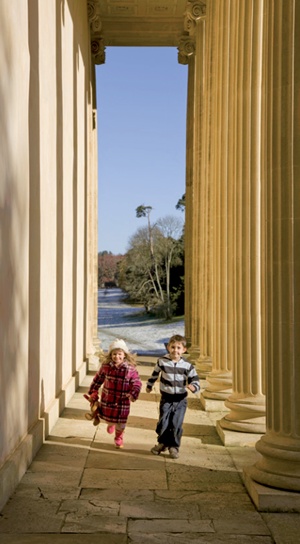
| ‘We are only trustees for those that come after us’ William Morris, 1889. (Photo: © NTPL/Rod Edwards) |
According to the old adage, you only
truly appreciate things when they are
gone: an observation that could hardly be
more true than when applied to heritage. We
enjoy the many benefits of living in a country
with a remarkable wealth of history. The
significance of our buildings and countryside
lies, in particular, in their extraordinary breadth
and diversity, reflecting a huge range of cultural
and natural heritage. The future of that heritage
is, however, dependent on our ability to meet
the duty of care passed down to us along with
the historic sites and spaces that comprise it.
The main reason the United Kingdom is
such a popular tourist destination is precisely
because of its rich and colourful past. While
the most important and iconic buildings are
protected by statutory legislation, many of
these buildings are still at risk, whether through
neglect or through the erosion of their character
by inappropriate development.
The responsibilities of guardianship must be applied to the country as a whole as well as to the individual elements that make up our heritage, which cannot effectively be protected piecemeal or without clear, overarching objectives. Rather, we must respect and protect our past while looking firmly to the future.
KEEPING HISTORY ALIVE
The National Trust was born in 1895 from a desire to protect the elements of our environment that people value. As well as country houses, these protected places now include ancient stone circles, mills, gardens, villages, castles, cottages, woods, farms, works of art and libraries, historic landscapes, stretches of coastline and important wildlife habitats.
The same belief in the vital importance of heritage protection also led to the founding of other organisations such as the Society for the Preservation of Historic Buildings (SPAB) in the 1870s, and Save Britain’s Heritage in the 1970s.
Although the loss of historic structures
has declined substantially in recent years, they
continue to face considerable threats, whether
from shifting lifestyle expectations or changes
in legislation. Many of the applications for
listed building consent that conservation
officers have to consider relate to alterations to
accommodate changes perceived as necessary.
Yet in reality these often have to be turned
down because they erode the character of
historic buildings to an unacceptable degree.
It can be hard to suggest that the occupants
should simply move somewhere else more
suited to their requirements but this is often the
only sure means of safeguarding the building.
While the overall character of our historic
fabric must be the main priority, this is not
to say that all historic buildings should be
preserved exactly as they are; the practical necessities of the modern world cannot simply
be ignored. In the face of climate change,
the need for sustainability is becoming of
paramount importance, and here there are
many simple acts of guardianship that can be
undertaken without compromising the integrity
of the structure. Invaluable guidance produced
by English Heritage describes how measures
such as lined curtains, draught excluders,
thermostatic valves and roof insulation can
make a huge difference to thermal performance,
without recourse to more intrusive measures
such as solar panels, ground source heat pumps,
or wind turbines.
THE SAVED AND THE LOST
 |
|
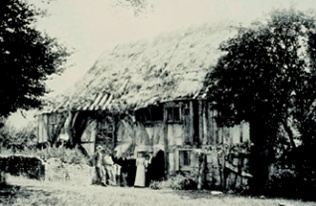
| The medieval Alfriston Clergy House, East Sussex, the trust’s first acquisition in 1896 | |
 |
|
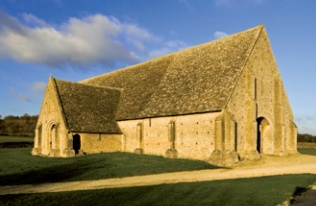
| Coxwell Barn in Oxfordshire, built around 1300 by the monks of Beaulieu Abbey |
The value of sound guardianship is embodied in the survival of Snowshill Manor in Gloucestershire and its extraordinary contents. In the 1920s, Charles Paget Wade, an eccentric architect who recognised the value of everyday objects, started filling his medieval manor house with artefacts. His collection grew so large that when he handed it over to the National Trust in the 1950s it included over 40,000 items which were regarded as rare and unusual. Those artefacts are seen and enjoyed today by over 50,000 visitors a year in the collection’s wonderful original setting.
The concept of guardianship is often associated with museums, but even there difficult decisions have to be taken when intrusive work is required. There can be few better examples of this than the recent re-wiring of Cragside, a stunning Grade I mansion in Northumberland. In 1880 it became the first building in the world to be powered by electricity, and it boasts a huge array of innovations, both inside and out, pioneered by its owner, the inventor and industrialist William Armstrong. To re-service a building of such monumental importance with minimal disturbance took years of planning. Cables were routed to follow the existing wiring and many of the original switchgear casings were utilised with new internals. Redundant components that could not be re-used were nevertheless retained so that the public could appreciate the installation as it was when first commissioned.
The first building to be ‘saved’ by the trust was the Alfriston Clergy House which it acquired in 1896 in partnership with the SPAB. It seems almost inconceivable today that such an iconic vernacular building was allowed to fall into a state of utter dereliction, but modern equivalents exist, ranging from the vulnerable Yorkshire field barns, to significant 1930s buildings that are under threat. The former certainly help to define landscape character in the Dales and are valued in this respect. However, changes in farming methods mean that most are now redundant and have fallen derelict. The majority are not listed, although they may be protected by National Park legislation, and they will be low on a farmer’s priority unless they offer some prospect of a return on investment. At least there are opportunities for grant aid in some cases, and the innovation of fitting some with internal pods to create low-cost accommodation for walkers is also being mooted.
English Heritage selects specific categories of buildings from time to time for spot listing, and recent examples have included the Art Deco era as well as 1960s high rise blocks. With fewer original examples surviving, these potential future classics have come to be more widely appreciated, assisted by a developing media interest in these more contemporary elements of the built heritage. Protection is currently set out in Planning Policy Guidance Note 15: Planning and the Historic Environment (PPG 15) by the so-called 30-year rule.
 |
||
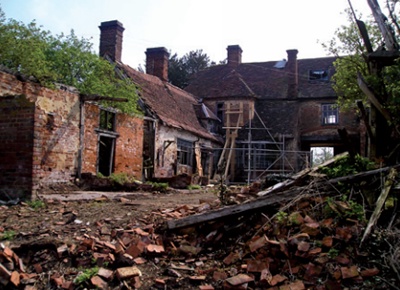
| New Inn at Stowe Landscape Gardens, Buckinghamshire, built in 1717 to provide food and shelter for the 18th century tourist and currently undergoing a major programme of conservation work | ||
 |
||
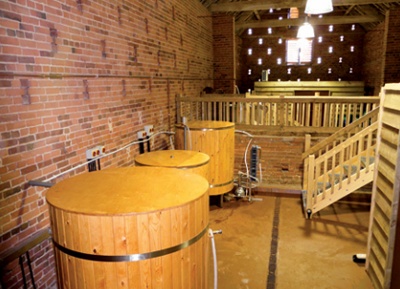
| A converted barn on the National Trust’s Brockhampton Estate near Worcester, houses a microbrewery. The external fabric remains untouched and a reversible raised timber floor inside supports the brewery infrastructure |
Even today, however, we are still seeing examples of the loss of iconic nationally important structures. An extreme, and striking, example would be Harmondsworth Barn, located with several other important listed buildings on a site that stands in the way of the future development plans for Heathrow Airport. The inevitable consequence will be the loss of this magnificent cathedral barn, one of only two surviving in the country. Relocation is not the answer, as the building would be deprived of its setting and context. Its probable loss represents a sad indictment indeed of what modern Britain values and prioritises.
The loss of each and every additional historic building makes the protection of the others ever more important. Take for example the guardianship of the other cathedral barn, Great Coxwell Barn in Oxfordshire. Regarded by William Morris as the most impressive vernacular building in the country, the approach to this awesome Grade I listed structure is one of good maintenance and minimal intervention, and today the public can see it much as it was when it was built around 1300 by Cistercian monks from Beaulieu Abbey. The timber frame inside has been repaired many times by craftsmen, and this only adds to its sense of history. In medieval times this was one of 27 similar structures in the area, a fact that brings the importance of its guardianship into even clearer focus.
In many respects of no lesser significance is Buscot Barn, which can be found just two miles down the road. The main significance of this substantial Grade II structure lies in the fact that it is the earliest known pre-cast concrete agricultural building. Few people know of its existence as it lies tucked away down a farm track and is used by a tenant farmer for storage. Nevertheless, were the barn to be lost, the community would lose a significant part of its history. The approach taken to its conservation has followed the principle of ‘little and often’, allowing it to be preserved in generally good order.
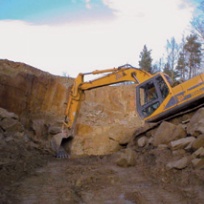
This approach also works exceptionally well in the very different context of Hardwick Hall in Derbyshire, where a team of stonemasons has been based for over 400 years, working on the continuous replacement of the soft sandstone that is still quarried on the estate.
 |
|
| The sandstone quarry at Hardwick Hall |
Poor guardianship, however, frequently leads to structures losing their historic features and sense of identity, with eventual decline into‘basket’ cases. Too frequently, demolition then becomes the only feasible option as repair costs are too heavy to contemplate. Assisted by grant aid, the New Inn at Stowe Landscape Gardens has been fortunate to escape this fate. A lengthy conservation work programme is currently taking place which will save this Grade II* property, allowing it once again to fulfil its original purpose as a gateway to the gardens.
Although PPG 15 states that it is always preferable to preserve the original purpose of a historic building, in most cases the retention of a building in its original state is a luxury, and a fine balance is therefore required as historic buildings are adapted to modern uses. The conversion of a barn into a microbrewery on the trust’s Brockhampton Estate is a good example of this. The external fabric remained untouched, and inside a reversible raised timber floor was inserted, with the infrastructure installed on top of this.
'FOR EVER, FOR EVERYONE'
The number of listed buildings and other structures has not increased much since PPG 15 came into force in September 1994: there are around 500,000 of them in England, of which around two per cent (9,000) are Grade I, four per cent Grade II* (18,000) and the rest Grade II. These structures are considered of sufficient quality and significance to merit designation, but it is the vast majority of our building stock, much of which dates from Victorian times, that defines our towns and landscapes, and therefore also needs consideration.
With the increasing impact of social, economic and environmental change we also have a duty to evolve in response to shifting opportunities and threats. Careful stewardshipand frugal use of natural resources has to underpin our decisions in order to ensure that those who come after us are able to appreciate many of the things that we do. The heavy burden of responsibility that we have to past, present and future generations alike cannot be underestimated. It is only through protective guardianship that we are able to conserve and also to understand the unique nature of each place within its setting and in relation to its wider context.
In 1889 William Morris said that ‘we are only trustees for those that come after us’. Less than 20 years later, the fundamental purpose of the trust was set out in the National Trust Act 1907 as the promotion of the long-term care of places of historic interest and natural beauty for the benefit of the nation, and the words of the trust’s motto, ‘for ever, for everyone’, apply as much today as they did over 100 years ago.
~~~
Recommended Reading
- The Architectural Heritage Fund, Funds for Historic Buildings: A Directory of Sources, AHF, London 2000
- C Brereton, The Repair of Historic Buildings: Advice on Principles and Methods, English Heritage, London 1991
- M Cassar, Climate Change and the Historic Environment, The Russell Press, Nottingham 2005
- K Clark, Informed Conservation: Understanding Historic Buildings and Their Landscapes for Conservation, English Heritage, London 2001
- Department of the Environment, Planning Policy Guidance Note 15: Planning and the Historic Environment, HMSO, London 1994
- English Heritage, Energy Conservation in Traditional Buildings, English Heritage Creative Services, London 2008 (a PDF version of this publication can be downloaded online at: http://www.climatechangeandyourhome.org.uk/live/content_pdfs/94.pdf)
- A Henry, Stone Conservation: Principles and Practice, Donhead Publishing, Shaftesbury 2006
- D Latham, Creative Re-use of Buildings (Volumes 1 & 2), Donhead Publishing, Shaftesbury 2000
- K Lithgow et al, National Trust Conservation Principles, National Trust, Swindon 2008
- R Oxley, Survey and Repair of Historic Buildings: A Sustainable Approach, Donhead Publishing, Shaftesbury 2003
- A Powys, Repair of Ancient Buildings, The Society for the Protection of Ancient Buildings, London 1995
- A Wright, Craft Techniques for Traditional Buildings, Batsford, London 1991