
Street Legal
A brief guide to the legislation and government guidance protecting the UK's historic environment
Jonathan Taylor
 |
|
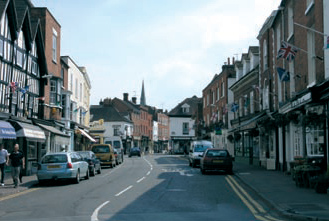
| Upton on Severn, Gloucestershire: a typical conservation area in a rural town centre |
Contrary to popular perceptions, the various systems which protect the UK's historic buildings are designed to manage change, not prevent it. Historic buildings can be adapted, modified and changed. They can even be demolished. The only real difference from an ordinary unprotected building is that more types of work require consent than are covered by the need for planning permission. However, carrying out certain works without consent is a criminal offence, punishable by fines and even imprisonment, so it is important to know what the requirements are and, if in doubt, to seek the advice of the local planning authority or a specialist professional before making the alteration.
THE LEGISLATION
The legislation In England and Wales the main legal requirements affecting the conservation of historic buildings are set out in the Planning (Listed Buildings and Conservation Areas) Act 1990. Its equivalents in Scotland and Northern Ireland (NI) are the Planning (Listed Buildings and Conservation Areas) (Scotland) Act 1997 and the Planning (NI) Order 1991.
These Acts are supplemented by various government guidance. For England these include Planning Policy Guidance Note 15: Planning and the Historic Environment (PPG15 as it is commonly known) and Circular 01/01: Arrangements for handling heritage communications. The equivalent documents for Wales are Circulars 61/96 and 1/98. Guidance for Scotland is given in the Memorandum of Guidance on Listed Buildings and Conservation Areas, issued by Historic Scotland in 1998. The Planning Service in Northern Ireland has produced PPS6, Planning, Archaeology and the Built Heritage. These documents provide the Government's interpretation of planning law.
Applicants must also take into account the policies set down by the local planning authority for conservation and more general planning issues. Some produce extremely useful guidance on their conservation areas and the features which must be preserved. They may include requirements for common developments, such as roof extensions, sometimes specific to individual buildings or terraces.
In addition to specific protection regimes, all historic buildings are also subject to ordinary planning controls and the requirements for planning permission under the Town and Country Planning Act. They are also affected by the Building Regulations.
LISTED BUILDINGS
A 'listed' building is one which has been entered onto the statutory list of buildings of 'special architectural or historic interest' maintained by central government.
The lists maintained in England, Scotland and Wales include approximately 440,000 entries, but as some list entries include several buildings, the total number of listed buildings is larger - perhaps 500,000 in England alone.
The listings are graded according to the architectural or historic importance of each building, Grades I and II* being the most important in England and Wales and category A the most important in Scotland. Other grades are II in England and Wales or B and C in Scotland. The grade or category generally reflects the age and rarity of the building, but many other factors are also taken into account, such as technological innovation, townscape value or connection with a particular historical event or individual.
In England, changes introduced in April 2005 resulted in English Heritage assuming responsibility for listing buildings, although the list is still formally produced by the Secretary of State for Culture. All new listings should now include a map and a 'summary of importance'. The purpose of the map is to show as clearly as possible the parts of the building and its site which are affected by the listing.
In Scotland and Wales responsibility for listing falls to the Scottish Ministers (Historic Scotland) and the Welsh Assembly (Cadw) respectively. In Northern Ireland it falls to the Environment and Heritage Service of the Department of the Environment (NI).
|
||||||||||||||||
| Table 1:Scheduled monuments, listed buildings and conservation areas - works requiring consent and types of consent required | ||||||||||||||||
The system of legislation and government guidance which protects listed buildings is designed to control change rather than to prevent it, since almost all buildings need to be adapted to accommodate new requirements from time to time. Applications for planning permission for works affecting listed buildings and their settings are considered very carefully. In addition, a special permit known as 'listed building consent' must be obtained from the local planning authority (or the Department of the Environment in NI) for all alterations, inside or out, and for demolition, in much the same manner as planning permission. Indeed, it is a criminal offence to demolish a listed building or to alter one in any manner which affects its character as a building of special interest without this consent.
Listed building consent is also required for alterations to any structure within its grounds (or 'curtilage') which was built before 1 July 1948.
In the event of a refusal or where a planning authority issues an enforcement notice, an applicant can lodge an appeal with the Planning Inspectorate (England or Wales), the Inquiry Reporters' Unit of the Scottish Executive, or the Planning Appeals Commission in NI. The appeal is formally made to the relevant government minister, but they are almost invariably conducted and determined by an inspector appointed by that minister.
Alterations to some places of worship fall outside this system of control, as the main churches enjoy what is known as 'ecclesiastical exemption'. In England and Wales all alterations requiring listed building or conservation area consent may be dealt with by the church under an 'approved system of control', provided that they affect a listed building which remains in use as a place of worship (including cathedrals, churches and chapels). In Scotland the exemption is limited to interior alterations only.
CONSERVATION AREAS
Although the principal form of protection in the historic environment is through the listing of buildings and the scheduling of monuments, the designation of conservation areas also brings some limited protection. Principally, this is achieved through the control of demolition and the additional scrutiny given to planning applications for alterations to existing buildings and the construction of new ones.
 |
|
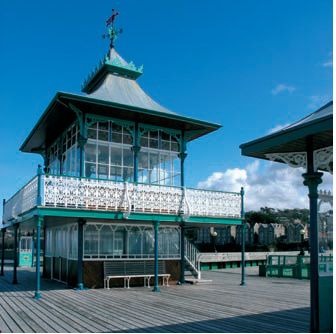
| The pagoda on the pier Clevedon, Somerset, completed 1869, restored 1997 and now Grade I listed |
In addition, the local planning authority can also introduce Article 4 directions to control specific alterations to houses which would otherwise be automatically approved under 'permitted development rights'. These rights apply only to houses under the Town and Country (General Permitted Development) Order. (Other buildings, such as flats and commercial buildings, do not have the same rights.) Typically an Article 4 direction will mean that planning applications will be required for the replacement of windows and doors, roof coverings, chimneys, garden walls and other visible features which contribute so much to the character of conservation areas.
There are over 9,000 conservation areas in the UK, and the range is vast. Usually buildings or townscapes form the focus, but often conservation areas include garden and landscape settings. In some cases they include development sites and other places which effect the setting of an historic centre, drawing attention to their importance and the need to promote their enhancement.
SCHEDULED ANCIENT MONUMENTSA wide variety of archaeological sites, monuments and structures ranging from standing stones to industrial sites and Second World War pill boxes are protected as scheduled monuments. The main differences between these sites and listed buildings are that scheduled monuments generally do not have a viable use, and under the Ancient Monuments and Archaeological Areas Act 1979 all works to them (not just alterations) require special consent - in this case 'scheduled monuments consent'. Again, transgressing the law can lead to a criminal conviction and a fine. In this case, it is a criminal offence to damage a scheduled ancient monument either deliberately, recklessly, or by carrying out work without the appropriate consent. It is also a criminal offence to use a metal detector on one or to remove an object from one without a licence.
There are currently around 30,000 entries in the schedules in the UK, and English Heritage, Cadw and Historic Scotland are engaged in new programmes to reassess all known sites. Only those of 'national importance' may be scheduled, and then only if scheduling is considered to be the best means of protecting them. Historic buildings and standing structures which are usable or could be made usable are more likely to be listed.
~~~
Recommended Reading
 |
|
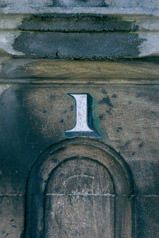
| The characterful patina of age and fading paint on a stone gatepost |
- Charles Mynors, Listed Buildings, Conservation Areas and Monuments, 4th edition, Sweet & Maxwell, London, 2006
Government guidance:
England:
- Planning Policy Guidance Note 15: Planning and the Historic Environment
- Planning Policy Guidance Note 16: Archaeology and Planning
Northern Ireland:
- Planning Policy Statement 6, Planning, Archaeology and the Built Heritage
Scotland:
- Memorandum of Guidance on Listed Buildings and Conservation Areas
Wales:
- 61/96 Planning and the Historic Environment: Historic Buildings and Conservation Areas
- 1/98 Planning and the Historic Environment: Directions by the Secretary of State for Wales