Basic HTML Version


1 6 6
t h e b u i l d i n g c o n s e r v a t i o n d i r e c t o r y 2 0 1 2
4.2
Solid-wall
Construction
Measuring and improving
thermal performance
Tim Yates
T
he pressure
to address the threat of
climate change by reducing the emission
of greenhouse gases, particularly carbon
dioxide, is growing steadily. The UK has
committed to an 80 per cent reduction in
CO₂ emissions by 2050. Early in discussions it
was acknowledged that buildings are a major
contributor to these emissions, so efforts to
improve the energy efficiency of our existing
buildings are intensifying. But for many
people the interest in building refurbishment
is also, and perhaps primarily, driven by a
desire to improve the living conditions in
older houses.
Most new buildings have cavity walls, but
many pre-1919 buildings are constructed of
solid natural stone or brick. These buildings
present a particular challenge when it comes
to improving thermal performance as any
improvements are likely either to change the
appearance of the building or reduce space
inside. Nevertheless, because around 35 per
cent of heat from dwellings is lost through
solid external walls, improving the thermal
performance of this type of wall is seen as key
to reaching the challenging emissions target
set by the government.
Research has shown that the potential
for reducing emissions (and saving money)
in older homes is considerable. Analysis of
the latest English House Condition Survey
data (2007) shows that 4.8 million dwellings
in England (21.5% of English housing stock)
were built before 1919 and the proportion
in the rest of the UK is similar. The current
average Standard Assessment Procedure
(SAP) rating of the pre-1919 stock is 40 (a low
energy efficiency or ‘E’ rating on the Energy
Performance Certificate (EPC) scale). This
is approximately ten SAP points below the
stock average of 50, and 50 points below
new-build which meets Code for Sustainable
Homes Level 3 (a ‘B’ on the EPC scale).
Improving energy efficiency
The key to improving energy efficiency
is to take a ‘whole-house’ approach. This
means considering the type of construction,
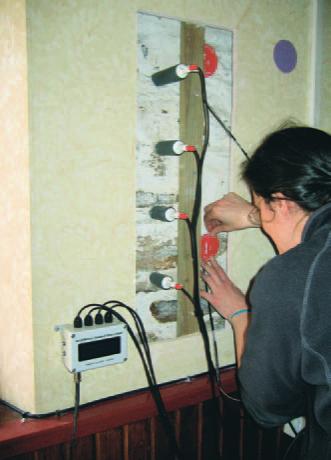
Figure 1 In situ measurement of thermal conductivity and interstitial moisture behaviour using heat flux monitors and
in-wall gradient sensors (Photo: Caroline Rye/Archimetrics Ltd)