
Heritage Protection in the Countryside
The Role of Land Management and Agri-environment Schemes
Victoria Hunns
 |
||
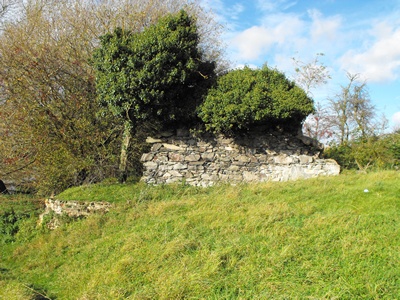
| Standing remains of the 16th century house and garden walls at Cotes, Leicestershire which is hoping to receive funding for scrub management through the Higher Level Stewardship Scheme (Photo: Elaine Willett/Natural England) |
The countryside today is the product of thousands of years of farming, working and shaping of the landscape.
Tracing the physical remains of our ancestors in this landscape – through traditional buildings, monuments, earthworks, parklands, field boundaries and buried archaeological remains – helps us to understand the organisation of their society. It also provides an insight into the ways in which humans interacted with and harnessed natural resources in their environment over time, and how they adapted to ongoing climatic, economic and technological change.
Land managers are the principal stewards of our rural heritage: farmers in England own over half a million traditional buildings, thousands of miles of historic field boundaries and the great majority of archaeological sites.
However, since 1945 changes in agricultural policy, technology and practice have had a particular effect on the condition of our historic environment resource. In 2005 English Heritage estimated that, in England, more than half of our nationally important archaeological sites were at risk from agriculture and over 45 per cent of historic parkland extant in 1918 had already been lost.
TYPICAL PROBLEMS
Archaeological features
Over the past 60 years, agriculture has been the cause of the outright destruction of 10 per cent of the recorded archaeological resource, and a further 30 per cent has been affected by piecemeal loss (Darvill and Fulton 1998).
Much of this damage has been caused by arable cultivation, as even regular cultivation to the same depth can result in damage to archaeological sites, particularly where the site slopes or where the soil conditions are challenging. Currently, the equivalent of nine per cent of the national total of scheduled monuments is still being actively ploughed.
Archaeological sites in grassland management tend to survive in far better condition. However, unmanaged natural processes, such as scrub and bracken encroachment, erosion and burrowing animals are the principal concern for many scheduled monuments. These factors, alongside overstocking or inappropriate placing of feeders, can cause significant physical damage.
Agricultural practice is also by far the greatest land use issue concerning the 13,400 estimated archaeological sites in wetlands, causing the desiccation and partial destruction of wetland sites in alluviated lowlands and lowland peatlands. In 2002 it was estimated that drainage of sites had affected 5,000 monuments, 2,180 monuments were by then under arable land instead of pasture, while 360 sites were no longer protected by upland peat (Van de Noort et al, 2002).
 |
||
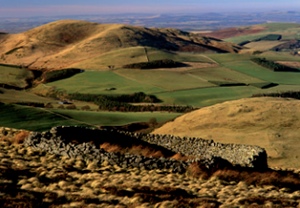
| Management options for field boundaries include stone wall and hedgerow maintenance and restoration, which are fundamental to conserving and enhancing the character of our historic landscapes. (Photo: Natural England) | ||
 |
||
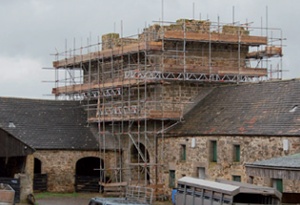
| An option for the maintenance and weatherproofing of traditional farm buildings such as this bastle helps farmers to keep their buildings sound and reduces the risk of expensive repair costs arising in the future. (Photo: Pamela Dive/Natural England) |
Designed landscapes/historic areas
Our English parklands are complex artificial ‘designed’ landscapes that form an integral part of our countryside and make a unique contribution to its character, biodiversity and cultural heritage. In many cases they are the product of several phases of design over several centuries and, like many other historic environment features, are vulnerable to changes in farming and silviculture practices. In 1995, more than 45 per cent of the historic parkland identified in 1918 had been lost, a total of 185,365 ha of land, and English Heritage (EH) recently reported that 96 of our nationally designated historic parks and gardens are ‘high risk’.
Key issues facing parkland include changes in stocking levels which can lead to under- or overgrazing, arable cultivation of former parkland, the loss of boundary features such as ha-has and hedges, poorly designed new planting, new development, the silting up of lakes and growth of secondary woodland or scrub.
Other historic areas of importance include battlefields which, where they survive, are not only of cultural and military historical significance but can also contain important topographical and archaeological evidence which can increase our understanding of the events which took place on their soil. Of the 43 battlefields on the national register, EH considered seven to be at high risk in 2009, one as a direct result of ongoing arable cultivation.
Historic buildings and structures
Historic farm buildings are one of our most dominant landscape features, as important to the ‘character’ of the countryside as the field patterns, boundaries and settlements around them. However, modern farm practices have led to many changes within farmsteads: new machines require larger buildings, changing attitudes to animal welfare and hygiene are reflected in new building standards, and economic pressures may have caused buildings or steadings to become redundant or amalgamated. As a result, traditional farm buildings are the single largest category of ‘at risk’ buildings on local authority risk registers and in 2005 it was estimated that the costs of repair for all historic farm buildings defined as being in ‘immediate risk’ was £1,026 million and for the buildings in ‘slow decline’ about £1,683 million (Gaskell and Owen, 2005).
Field boundaries
A potent reminder of farming activity and tradition over many centuries, field boundaries define much of the structure and pattern of our landscapes, with many local variations in hedgerow and wall construction, management and ecology.
However, they too are in decline as a result of a lack of appropriate management. Between 1998 and 2007 the length of ‘managed’ hedgerow decreased by six per cent (26,000 km) in England, a large proportion of these having turned into lines of trees and relict hedges. Stone walls, on the other hand, fared better, their length decreasing by just one per cent (902km) during the same period.
CONSERVING THE FARMED HISTORIC ENVIRONMENT
The rural historic environment does not have any special protection beyond that inferred through designation or planning requirements. Only a small proportion of the nation’s historic environment features are designated, leaving a huge number of nationally, regionally and locally important historic environment features and areas vulnerable to change.
Many of these features would benefit from more informed land management, taking into account the damage that can be caused as much through neglect as through continuing practices that cause active deterioration. One of the key ways of doing this is through incentivising management through EU funded programmes known as agri-environment schemes.
In England, agri-environment schemes (AES) are administered by Natural England on behalf of Defra. The current scheme, Environmental Stewardship, provides financial rewards to land managers delivering effective environmental management.
There are two levels to the scheme: Entry Level Stewardship (ELS) and Higher Level Stewardship (HLS). ELS is open to all farmers across all farming types. It requires a basic level of environmental management and farmers can choose from more than 80 management options which attract points. Options contributing to the protection of the rural historic environment include hedgerow and stonewall maintenance, maintenance of traditional farm buildings, scrub management on archaeological features, managing earthworks under grassland and the removal of archaeological features from cultivation. Provided applicants meet a points target and agree to carry out simple but effective environmental management on their land, they will be accepted into ELS, with a five-year agreement. Uplands ELS, which was launched in February 2010, supports hill farmers through payments for environmental management and has a slightly different suite of options and a range of capital works, such as stone wall restoration and woodland fencing.
|
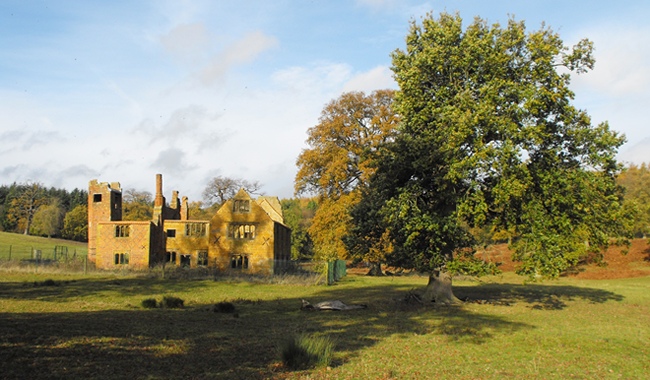
| At Fawsley Park, Northants, funding was provided for the development of a parkland management plan to look at the development of the parkland, the significance of features and views, and to resolve other issues, before detailing opportunities for restoration. The restoration work then included a suite of grassland maintenance, restoration and creation options alongside capital items for the repair of important structures and the maintenance of woodland pasture. (Photo: Elaine Willett/Natural England) |
As part of the application process, farmers and land managers are alerted to the historic environment interests of their holding, which enables them to choose their options more easily. In addition, whether managed under an option or not, farmers must agree to ‘retain and protect’ these historic features for the duration of the agreement.
Higher Level Stewardship (HLS) aims to deliver more significant environmental benefits in high priority situations and areas, and thus is a more targeted scheme. It involves more complex environmental management, and therefore includes advice and support from Natural England advisers. HLS is usually underpinned by an entry level (ELS) agreement, and also has a wide range of management options designed to support key features of the different areas of the English countryside. It can also contribute to a wide range of capital works such as the restoration of hedgerows or historic farm buildings and structures, or parkland restoration work.
The importance of these schemes as tools to help protect the rural historic environment resource cannot be overstated. In England, 59 per cent by area of scheduled monuments and 62 per cent of the undesignated monuments identified in a dataset held by Natural England are currently on land under AES agreements. In terms of actual management, the figures (as of October 2010) are also impressive, with over 23,200 ha of monuments in arable areas having had the impact of cultivation reduced, 88,000 ha of grassland sites being managed more effectively and over 300 monuments being managed specifically to prevent scrub encroachment. Of this total, around 2,000 scheduled monuments (10% of the total) are now being managed under historic environment options in ELS and HLS, and of these around 800 have been either taken out of cultivation or had the impact of cultivation reduced.
Over 1.5 million sq m of traditional farm buildings are now being maintained under the ELS option and a substantial number of historic buildings, from stables to bastles (as fortified farmhouses are known in the North) are being more substantially repaired with the £8 million a year currently available in HLS. In terms of parklands, English Heritage’s Heritage at Risk 2009 survey revealed that 45 per cent of registered sites are now covered by conservation management plans and highlighted the importance of Environmental Stewardship in that process. As for boundary features, 24 per cent of all stone walls and 41 per cent of all hedgerows in England are now actively maintained under AES.
References
- T Darvill and A Fulton, The Monuments at Risk Survey of England 1995, Bournemouth University and English Heritage, 1998
- P Gaskell and S Owen, Historic Farm Buildings: Constructing the Evidence Base, English Heritage and the Countryside Agency, 2005
- R Van de Noort et al, Monuments at Risk in England’s Wetlands, Research report for English Heritage, University of Exeter, Exeter, 2002