
Conservation of Historic Designed Landscapes
and the English Planning System
Jonathan Lovie
 |
||
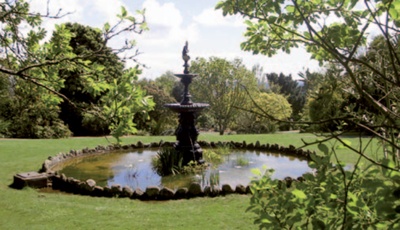
| Morrab Gardens, Penzance: A late 19th century public park designed by Reginald Upcher of Poole which is included on the Register of Parks and Gardens at Grade II (Photo: Jonathan Lovie) |
The study of ‘garden history’ is a relatively new discipline. The term itself, like the frequently used short-hand ‘parks and gardens’, fails to recognise the dynamic nature of the subject, and the constantly evolving understanding of the various landscape types which make a significant contribution to England’s cultural heritage – and indeed, to European and world culture.
In order that designed landscapes of all types, from the great landscape parks such as Stowe or Petworth, to public parks, cemeteries and even institutional landscapes, that have a special or national significance should be easily recognised, the 1983 National Heritage Act empowered English Heritage to compile a Register of ‘parks, gardens and other land’.
THE REGISTER OF PARKS AND GARDENS OF SPECIAL HISTORIC INTEREST
The initial Register was compiled in the mid-1980s and revised in the late 1990s. The designation now comprises over 1,600 designed landscapes which are nationally significant, and new sites continue to be added as and when they are identified.
In order to merit inclusion on the Register, and in order to ensure a consistency within the designation, a site must demonstrate through its historic development and interest, its design and integrity that it meets one or more of English Heritage’s criteria for designation. To this extent it is important to remember that the Register is a highly selective designation, and only those sites which are assessed to be of national significance will be included.
While all landscapes designated on the Register are of national significance, it is obvious that some will, by their age, rarity or perhaps design interest, be of greater significance than others. In order to reflect this, designated landscapes are graded at Grade I, Grade II* and Grade II.
Grade I landscapes will be those considered to be of international significance (such as Stowe, Blenheim or Highgate Cemetery); Grade II* sites are those which are of exceptional national significance (such as Godolphin in Cornwall or Crystal Palace Park in London); and Grade II sites are those considered to be of national significance. The latter includes a diverse selection of landscape types, ranging from country house gardens to sites such as the garden developed by the sculptor, Dame Barbara Hepworth, at her studio in St Ives, Cornwall.
 |
|
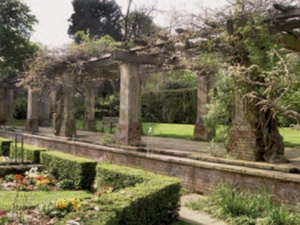
| Stoke Poges Gardens of Remembrance, Buckinghamshire: A 1930s commemorative landscape included on the Register at Grade I (Photo: Jonathan Lovie) |
|
 |
|
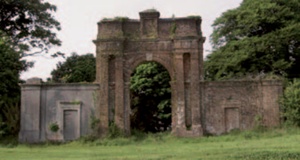
| The Boringdon Arch near Plymouth is a Grade II* listed structure designed by Robert Adam, standing above a scheduled ancient monument, and is integrally linked to the historic and aesthetic development of the adjacent Grade II* designed landscape at Saltram (Photo: Jonathan Lovie) |
The Register of Parks and Gardens forms one of the suite of national designations applied to the historic environment, alongside listing for buildings, scheduling for archaeology, and the Register of Historic Battlefields.
Under the programme of Heritage Protection Reform introduced by the labour government all historic environment designations are being brought together within the new National Register. This move will help to emphasise the way in which the different elements of the historic environment are frequently inextricably linked: for example, a registered landscape may form the designed setting of a listed country house, and may contain a scheduled feature which was incorporated into the landscape design; and the whole might form part of the setting of an historic battlefield. The historic development, interest and therefore significance of each one of these features is thus clearly related, and to some extent dependent upon, the significance of the other features. It therefore follows that a development which impacts adversely on one element of the historic environment may have an impact on the overall significance of that site.
These reforms do not affect the widely varying levels of protection which apply to the different types of heritage asset. Thus scheduled monuments continue to enjoy the greatest degree of statutory protections, closely followed by listed buildings. Registered designed landscapes, however, remain without any additional statutory control or protection, as before.
In order to seek to protect important designed landscapes from the adverse impact of change, other ‘tools’ within the planning system must therefore be deployed, such as the listing of built structures and the scheduling of other features.
PPS5: NEW GOVERNMENT POLICY
Although the labour government’s proposals for a new heritage protection act are unlikely to be fulfilled by the new coalition, one key element of their proposals was achieved in March 2010, just before the election: PPS5 was issued.
Planning Policy Statement 5: Conservation of the Historic Environment, to give it its full title, replaced two former policy documents, PPGs 15 (Planning and the Historic Environment) and 16 (Archaeology and Planning), effectively unifying control over all ‘heritage assets’. Listed buildings and scheduled monuments are now ‘designated heritage assets’, as are world heritage sites, protected wreck sites, registered parks and gardens, registered battlefields and conservation areas. PPS5 thus provides the new unified framework within which planning applications affecting nationally designated landscapes must be determined.
The PPS makes several radical departures from previous guidance, the first being its emphasis on understanding the ‘significance’ of the heritage asset, which it defines as; ‘The value of a heritage asset to this and future generations because of its heritage interest. That interest may be archaeological, architectural, artistic or historic’. This concept thus neatly embraces all historic assets, including parks and gardens, and ties in the terminology of its parent act, the Planning (Listed Buildings and Conservation Areas) Act 1990, which refers to ‘special architectural or historic interest’.
Furthermore, some degree of protection is extended to all heritage assets, whether designated or not:
In considering the impact of a proposal on any heritage asset, local planning authorities should take into account the particular nature of the significance of the heritage asset and the value that it holds for this and future generations. (HE7.4)
If there is any doubt of the implications of this for a planning application affecting a historic park or garden that is not included on the statutory register, Policy HE8 is even clearer:
The effect of an application on the significance of such [an undesignated] heritage asset or its setting is a material consideration in determining the application. (HE8.1)
This does not mean that the Register of Parks and Gardens is now redundant, as the much stronger wording used in relation to designated assets in policy HE9 makes clear:
There should be a presumption in favour of the conservation of designated heritage assets and the more significant the designated heritage asset, the greater the presumption in favour of its conservation should be. … Substantial harm to or loss of a grade II listed building, park or garden should be exceptional. Substantial harm to or loss of designated heritage assets of the highest significance, including scheduled monuments, 14 protected wreck sites, battlefields, grade I and II* listed buildings and grade I and II* registered parks and gardens, World Heritage Sites, should be wholly exceptional. (HE9.1)
 |
|
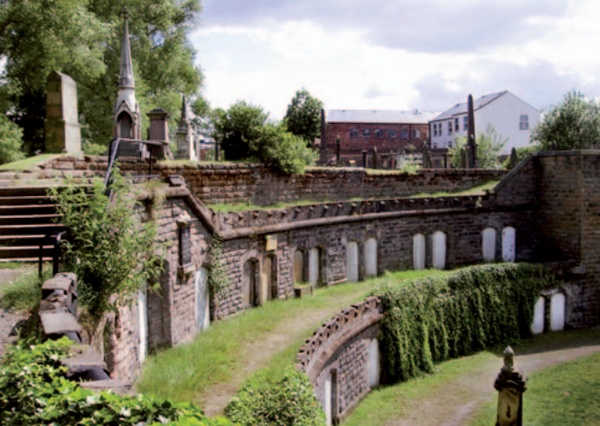
| Warstone Lane Cemetery (Grade II) in the Birmingham Jewellery Quarter conservation area makes a significant contribution to the special historic interest and character of that place and, through its collection of funerary monuments, reflects the historic development of the surrounding area. (Photo: Jonathan Lovie) |
PPS5 is considerably shorter than either of the two PPGs it replaces. It achieves this by focussing on the principles rather than the detail and, in particular, on fostering an understanding of the impact of a proposal on the significance of the heritage asset:
Local planning authorities should require an applicant to provide a description of the significance of the heritage assets affected and the contribution of their setting to that significance. The level of detail should be proportionate to the importance of the heritage asset and no more than is sufficient to understand the potential impact of the proposal on the significance of the heritage asset. (HE6.1)
The general philosophical approach of PPS5 clearly corresponds well to the more ‘holistic’ approach to the historic environment emerging from Heritage Protection Reform. However, delivery of this more informed approach to planning for the historic environment will require significant investment of resources: owners and developers will have to be willing to invest in appropriate professional advice; local authorities will need to invest in their historic environment services in order that appropriate levels of information are available; and the external expert advisers, the statutory consultees, will almost inevitably find that their workload increases as more detailed scrutiny of the nuances of development proposals will be required.
STATUTORY CONSULTATION ON HISTORIC DESIGNED LANDSCAPES
Government Circular 9/95 sets out the requirement for planning authorities to consult The Garden History Society and English Heritage on planning applications affecting nationally designated designed landscapes:
- The Garden History Society must be consulted on applications affecting any registered landscape, regardless of grade
- English Heritage must be consulted on proposals which affect Grade I and Grade II* registered sites.
Additionally, English Heritage may comment on proposals which affect Grade II landscapes, for example where the landscape forms the setting to a highly graded listed building, or where there are wider policy implications.
Although sometimes criticised for introducing an element of delay into the determination of planning applications, statutory consultation provides planning authorities with an essential opportunity to acquire additional expert guidance which is often unavailable ‘in house’. It is also an important element in the process of democratic scrutiny of development proposals.
In order to streamline the application process, and to minimise the potential for delay once an application has been submitted, it is important that planners encourage applicants to follow best practice and engage in as wide-ranging pre-application discussions as possible. Such discussions should certainly involve the appropriate statutory consultees, and ideally should also involve relevant national and local amenity societies and other ‘stakeholders’.
LOCALLY DESIGNATED DESIGNED LANDSCAPES
Not all designed landscapes which are important to local communities, or which help to create a particular sense of place or local distinctiveness, will meet the high criteria for national designation; and there are many sites which have been identified through English Heritage’s Register Review Programme as being of potentially national significance but which have not yet been assessed for inclusion on the Register of Parks and Gardens.
Such sites, although falling outside the remit of national designation, clearly merit identification within the planning system in order that the impact of potential change may be correctly evaluated before permission is granted for development. Already many local authorities include a Local List of locally or regionally significant designed landscapes within their Local Development Framework. Such lists need to be robust and ideally supported by a definitive map and a statement setting out why the site is considered to be significant.
PPS5 places much greater emphasis on the importance of such sites, and actively encourages local authorities to identify places which are significant for their communities within the planning system. In addition to the base list within the LDF, it is envisaged that supporting evidence will be gathered within the county’s Historic Environment Record (HER), a much expanded form of the old Sites and Monuments Record. The HER thus becomes an essential repository of data to be consulted by anyone with an interest in the historic environment, and a key element in the reformed planning system.
There is an increasing number of counties developing Historic Environment Records providing on-line resources to owners, developers and the wider community.
CONSERVATION AREAS AND DESIGNED LANDSCAPES
Designed landscapes are often crucial elements in the historic and aesthetic interest of a particular locality. It therefore follows, especially in urban areas, that many conservation areas will include, or be closely associated with, a designed landscape. Examples might include an early 19th century residential development surrounding communal gardens or an urban square (Calverly Park, Tunbridge Wells – Grade II); a cemetery or burial ground serving a particular community (Key Hill Cemetery, Birmingham – Grade II*); or a public park with associated residential development (Crystal Palace Park – Grade II*). The same principles of association will apply equally to nationally designated designed landscapes, and those which have been identified on the local lists.
 |
||
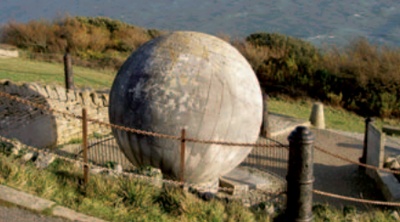
| Durlston Castle near Swanage in Dorset is a remarkable late 19th century didactic landscape which is included on the Register at Grade II. A blanket tree preservation order coupled with a raft of natural environment designations has prevented the appropriate management of trees within the designed landscape leading to the loss and erosion of important designed views which form part of the special historic interest and character of the site. (Photo: Jonathan Lovie) |
While the connection between designed landscapes and conservation area designation is perhaps more frequent and obvious in the urban context, there are rural situations where landscape designation and conservation area designation work together. An 18th or 19th century model village, for example, may form an integral part of the development of a designed landscape. In the case of the Milton Abbas conservation area in Dorset, the village was designed by Lancelot ‘Capability’ Brown and Sir William Chambers in the late 18th century, and is integrally linked to the evolution of the Grade II* designed landscape associated with Milton Abbey which is nearby. While the village is not included within the registered site boundary of the designated landscape, it forms an essential element of its setting and features in a key designed view from within the landscape.
Conservation area designation extends the scope of protection to include the demolition of unlisted buildings within the area through the need for conservation area consent, and it introduces protection for trees. Specific alterations to houses may also be introduced through Article 4 designations. Designation thus offers greater control over many of the historic assets comprised within it. It is a locally accountable and highly democratic designation, and it is thus a particularly appropriate tool for seeking the conservation of both nationally and locally designated designed landscapes and, crucially, their settings.
It is clear from PPS5 that the Government’s intention was to promote the greater use of conservation areas, and from the perspective of historic designed landscapes, whether nationally designated or not, this is very much to be welcomed and encouraged.
CONSERVATION OF HISTORIC PLANTING WITHIN DESIGNED LANDSCAPES
Inclusion of a landscape on the Register of Parks and Gardens does not bring with it any additional statutory control. It follows, therefore, that the planning authority does not acquire any control over changes to historic planting within that site unless any proposed change requires planning consent. Thus it is possible for the owner of a registered garden, for example, to remove an Arts and Crafts topiary garden completely, even if that feature made a significant (or, indeed, the principal) contribution to the site’s special historic interest. The only exception would be if the removal formed part of a development scheme, or if the site fell within a conservation area, or the topiary trees were covered by a tree preservation order.
In this situation, the conservation area designation offers a much more appropriate and flexible framework for conservation and management than the tree preservation order. The conservation area designation is predicated on an understanding of those elements which contribute to the special historic and aesthetic interest of that place, and its sensitive interpretation will allow for appropriate management of trees and larger shrubs.
The same is often not the case with planting subject to tree preservation orders (TPOs), especially where these are applied on a blanket basis. Indeed, such a designation can, ironically, be a disincentive to appropriate management, with the result that over time the proliferation of weed species and scrub leads to a significant diminution of the special historic interest and character of the designed landscape through, for example, the erosion of designed views. TPOs are thus a very blunt weapon which should be used with great discrimination and only in situations where other designations more appropriate to historic designed landscapes cannot be applied.
THE FUTURE
At the time of writing we are at a point both of great potential, and of great uncertainty.
PPS5 offers an exciting prospect for a more unified and informed approach to managing the historic environment, with challenging opportunities for all involved within it to demonstrate an understanding of what makes a particular place ‘special’ and why it merits conservation, and to what extent it may merit preservation.
However, the new coalition government’s proposals for the protection of England’s historic environment remain unclear. Furthermore, the huge economic uncertainties facing the country over the next few years call into question the ability of either national or local government to deliver key elements of the new system. It is clear that far from being revenue neutral the new system will require significant investment from developers, local authorities and the statutory consultees. In the context of significant public spending cuts, central government is unlikely to provide, and with the present system already stretched, ‘efficiency savings’ seem inevitable.
While it may not be possible to deliver the entire reform programme in the short or even medium term, at least we now have some key elements of a system to which we can aspire.