
Flooding
Risk and Remediation
Ruth Nicholls
 |
||
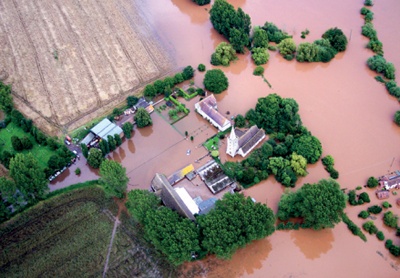
| The Church of St Andrew and St Bartholomew, Ashleworth, Gloucester and adjacent buildings in July 2007: the line of trees at top right marks the western bank of the River Severn (Photo: R Keene) |
Freak storms, often associated with Atlantic hurricanes, and the risk of flooding have been a threat to communities in the British Isles for centuries. However, climate change predictions suggest that changes in global temperatures will alter weather patterns, causing sea levels to rise and an increased frequency and intensity of extreme weather. The UK will be prone to prolonged and higher rainfall that will increase the likelihood of flooding. Historic buildings in areas so far unaffected by flooding may be poorly prepared to face this threat.
The last ten years have seen a number of floods in the UK that have caused serious damage and disruption. Many historic buildings have been affected. In 2004 Hurricane Alex caused storms over Cornwall with a flash flood in Boscastle where the River Jordan rose by 2m in one hour and tore through the village centre.
In 2007 towns and villages all down the Severn valley were flooded when the river burst its banks and in 2009 in Cumbria the rivers, streams and becks became raging torrents sweeping away bridges and causing widespread damage in many communities. In 2007 Gloucester was hit by both the rise in the Severn and its tributaries and by localised surface water and foul sewer flooding.
Images in the media of the Mythe Water Treatment Works at Tewkesbury and the electrical substation outside Gloucester surrounded by water were a reminder that many services and buildings are located on flood plains. The loss of water supply to the community and the narrowly averted catastrophic flooding of the substation made the threat of climate change seem more immediate and more serious.
In response to recent floods, English Heritage (EH) has prepared guidance for the custodians of historic buildings entitled ‘Flooding and Historic Buildings’ (EH, 2010). This article draws on EH guidance and on experience gained at the flood-damaged Church of St Andrew and St Bartholomew, Ashleworth, Gloucestershire, where the author is the church architect. The lessons learned at Ashleworth are relevant to other historic churches and to all old buildings at risk of flooding.
WATER AND FLOOD DAMAGE
The Environment Agency (EA) describes the risk of flooding as the chance that a location will flood in any one year and has developed comprehensive maps that illustrate the areas at risk. The EA defines the types of flooding as: river flooding, coastal flooding, surface water flooding, sewer flooding, groundwater flooding and reservoir flooding.
Water damage can be classified into three categories:
- clean water from internal water pipes
- grey water from internal wastes such as washing machines
- black water, which contains contaminants.
Contaminants vary depending on the surrounding environment and catchment areas. As the flood water recedes, mud, slurry, salts, raw sewage and other chemicals and matter are left behind. The effects on a building’s fabric depend on its construction and the duration of exposure and saturation.
Water damage can be divided into primary and secondary damage:
Primary damage includes damage to the structure, expansion or shrinkage and staining. It will largely depend upon the severity and velocity of the flood waters, how long the materials remain saturated and their absorbency. Contaminants can also cause damage: the salts in seawater are corrosive to some metals and some absorbent materials cannot be cleaned if they are stained by oils. Cleaning and drying out processes can also be damaging.
Secondary damage is caused by moisture travelling to other areas than those originally affected. Water vapour rising through a building can cause mould growth. Hygroscopic materials, which absorb moisture, will support mould growth because they maintain a high relative humidity at their surface. This can also occur on less absorbent materials if they provide a cool enough surface to elevate the humidity sufficiently. Introducing heat to dry the fabric of the building can make the situation worse if the vapour this produces cannot be removed.
CLEANING AND DRYING
Many historic buildings are fairly flood-resilient and most construction materials can withstand the occasional brief saturation. However, perhaps the most problematic aspects of flooding are managing the drying out process and the effective removal of contaminants.
Where properties are insured, the insurer will often appoint a ‘disaster-recovery contractor’, who will first make a hazard and risk assessment. This assessment will cover a whole range of potential risks, including the stability of the building. They will also look at priorities for minimising any primary damage, and assess the potential for secondary damage and how this can be avoided. Some independent expert advice from an architect or other specialist may be necessary to agree the best way to save as much of the historic fabric as possible and to agree methods of opening up voids, removal of finishes and cleaning and drying out.
 |
||
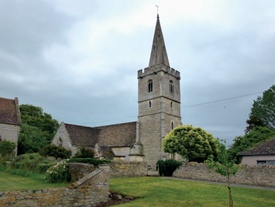
| The Grade I listed Church of St Andrew and St Bartholomew, founded in the 12th century |
The clean-up operation should start as soon as the waters have receded, the flood risk has passed and access to the building is deemed safe. It is easier to remove mud when wet, and cleaning with plastic shovels, vacuum cleaners and soft-bristled brushes to gently remove the silty deposits is usually the best method. A neutral detergent and water solution should be used to clean floors and walls, which should then be rinsed with clean water, dried with cloths and then allowed to air dry before being sprayed with a sanitising mist to kill any remaining bacteria. Some materials will need to be sent to specialist cleaners for removal of contaminants.
The clean-up operation will be followed by a planned programme of drying out. Old buildings must not be dried out too quickly. As EH guidance points out: ‘thin timber elements, including floors, doors and panelling, may warp, twist or split; salts will migrate through old stone and plasterwork, causing them to blister, powder and exfoliate; [and] many painted surfaces will peel and flake’ if dried out too quickly (‘Flooding and Historic Buildings’, EH, 2010).
Temperatures above 18°C may also encourage mould growth. Conversely, temperatures below 4°C allow the formation of ice crystals in moisture-laden materials, leading to spalling and de-lamination.
‘Forced’ drying of walls can produce a dry surface while the wall mass remains wet. This can lead to secondary damage, often appearing later as the repair works are completed. According to EH: ‘the best general advice is to dry the building gently and slowly, first through natural ventilation, and then with the aid of dehumidifiers’ (EH, 2010). Cross-ventilation is greatly aided by air movement, which can be natural or controlled through the use of fans.
Drying is a two-stage process: the first stage is drying by liquid transfer to the surface and the second is drying by vapour transfer. The first stage is fast and effective and governed by ambient conditions of evaporation, the second stage is much slower and almost independent of the ambient conditions.
Air temperature needs to be maintained, preferably below 20°C. The relative humidity should be monitored and maintained at 40-50 per cent. Dehumidifiers with humidity sensors can provide better controlled drying conditions.
Independent experts will give advice on drying and treating woodwork to prevent decay. They can carry out surveys to assess the potential risks of fungal and other infestations and they have the equipment to monitor the condition of inaccessible timbers over time.
Independent experts may also be required for advice on drying wall paintings and the use of chemical cleaners to remove oil contaminants.
DAMAGE TO HISTORIC FABRIC
Historic building materials typically require careful and specialist treatment during cleaning and drying out in order to prevent damage and it is important to agree with the loss adjustors and emergency contractors on appropriate methods of cleaning and drying out.
As EH’s guidance warns: ‘organic materials such as timber swell and distort when wet, and suffer fungal and insect infestations if left damp. If dried too quickly and at temperatures that are too high, organic materials shrink and split, or twist if they are restrained in panels. Inorganic porous materials do not generally suffer directly from biological attack. However, enormous damage can be caused when inherent salt and water (frost) crystals, carried through the substrate, are released through inappropriate drying or very cold conditions’ (EH, 2010).
Concealed cavities will also require cleaning out and drying, and in historic buildings it is important to agree how these areas are opened up. Water trapped behind panelling can be allowed to drain out by drilling tiny holes. It may then be possible to dry behind the panelling with ‘injection drying’, by pumping warm air into the voids. In some cases the panelling may need to be removed and dried properly by specialist joiners, who will number the panels and stack, turn and load them properly to counteract warping. The removal of historic lime plaster from a surface is rarely necessary, as the lime is very porous and helps underlying fabric to breathe.
Floorboards can buckle if they become saturated as a result of prolonged immersion in water and some may never regain their previous profile. Saving historic fabric should always be attempted first. Removing a number of intermediate boards can help to allow some expansion without causing permanent damage and buckled boards can be taken up and carefully stacked to allow them to dry slowly.
 |
||
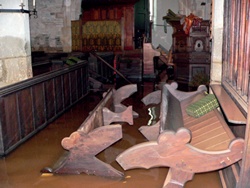
| The church interior as the waters receded with the high water mark clearly visible on the wall |
Wall and ceiling plaster finishes have different chemical and physical responses to water saturation. Modern gypsum-based plasters are hygroscopic and water-sensitive as the calcium sulphate in the plaster is partially soluble in cold water, so they are likely to need remedial treatment or replacement. Older lime-based plasters, on the other hand, may soften and swell when wet, but usually without collapsing, and they harden again once dry. De-bonding of lime plaster can occur if the underlying laths swell and then shrink, causing the plaster nibs to break, but they can usually be re-anchored using resins and screws.
Some metal objects which are subject to corrosion if temporarily immersed in water will not come to harm once dried. However, where water is retained around metal ties, cramps, pipes and conduits embedded in masonry walls or floors, ferrous metals can continue to corrode and expand leading to cracking and spalling of surfaces and to localised de-bonding. Serious structural problems can emerge, particularly in maritime environments. Signs of problems such as rust staining, cracks and movement may require investigation and invasive repairs.
Paint finishes and varnishes are vulnerable to staining, flaking, blooming and dissolution of binders. Permeable traditional paint finishes such as limewash and distemper that allow moisture to evaporate through their surfaces from the substrate, can be cleaned, disinfected and left to air dry or repainted to match. Relatively impermeable modern paints such as alkyd oil-based paints or acrylic emulsions cannot be reapplied until completely dry and may require stripping off completely to allow the substrate to dry out effectively.
Historic painted decorations should be treated by a specialist conservator. Dehumidifiers and heaters should not be used in interiors that have historic wall paintings on plaster or timber. Slow drying supervised by a conservator is essential to avoid salt crystallisation, paint flaking and mould growth.
REMEDIAL WORK AND REPAIRS
Debris that gets swept up by fast moving waters can cause mechanical damage. After the initial cleaning, decontamination and drying, a survey of the condition of the property will be required, including potential structural and material damage. The degree of moisture content of the various elements of the buildings will also need to be assessed including the condition of external walls, internal walls, floors, basements and cellars, and floor cavities, building services, appliances and fittings.
FLOOD PLANNING
The Environment Agency has produced guidance on how to plan for and respond to a flood. Templates can be downloaded from the EA website and tailored to prepare a flood plan for a particular historic building. English Heritage’s ‘Flooding and Historic Buildings’ also provides guidance on issues ranging from flood resistance measures to monitoring a flood-damaged building after remedial works have been completed.
ST ANDREW’S AND ST BARTHOLOMEW’S CHURCH, ASHLEWORTH, GLOUCESTERSHIRE
The Grade I listed church of St Andrew and St Bartholomew was founded in the 12th century and lies alongside the river Severn below the level of the bank that has been built up as flood defence. The church is part of a group of 15th-century buildings including a tithe barn. The rest of the village is built on higher ground to the west.
At Ashleworth the river Severn is in its last stage in a wide flat valley through which it meanders down to the Severn estuary and out into the Bristol Channel. The tidal reach is a few miles downstream at Maisemore. According to the EA flood map, the church is at risk of extreme flooding described as a 1 in 1,000 chance of occurring each year. Without the river defences this risk would rise to 1 in 100.
Periodic flooding of the church includes significant floods in 1772, 1896 and 1897. Before 2007, the most recent significant flood was in 1947 and was recorded at 1,219mm above the floor level of the south aisle. The major flood of July 2007 was of similar proportions to that recorded in 1947.
 |
||
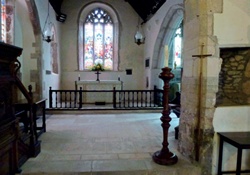
| The chancel with its new stone floor |
Shortly before the church flooded in July 2007 the owners of a historic manor house upstream from the church received an automated warning from the EA advising them of the risk of flooding, which they relayed to a churchwarden. A group of villagers moved the loose and soft furnishings to higher levels in the church.
Unlike previous floods, the July 2007 flood came up very quickly and entered the church sometime in the morning. As can be seen from the aerial photograph (see title illustration), the water cut off the approach to the church. The churchwardens could not get in until a week later when the waters had receded.
Cleaning and drying
As a result of periodic flooding the interior
of the church was already reasonably flood
resilient. When the 2007 floodwaters subsided
it was found that the church had not sustained
any structural damage. The major casualty
was the organ, despite the fact that it was
raised on a platform.
The clean-up was carried out by the
emergency contractors and involved the
following operations:
- muddy water and contaminants from the neighbouring farm’s pig unit were removed. The only hidden cavity was behind some 19th-century and modern panelling in the base of the tower; the panelling was dismantled, cleaned and set aside for refixing
- loose furnishings such as the altar frontals and hassocks were saved from saturation but had to be sent to specialist cleaners
- all the furniture was decontaminated and removed, with only the font and the pulpit left in the church. The furniture and fittings were transported to a barn and left under cover. The barn was partly open which allowed plenty of air circulation. Security was a concern so a full inventory was made by the churchwardens (no losses were sustained)
- the organ was dismantled and sent away for cleaning and repair by a specialist organ builder
- the under-pew heaters and low-level electrics, which were all damaged irretrievably, were removed
- the power was isolated and a temporary supply was arranged by the emergency contractors to allow them to use mechanical fans. Air circulation was improved by opening the doors to the south, west and south east. Assisted drying with extract fans took two months to reduce the moisture levels to acceptable levels that would provide an equilibrium of 10-15 per cent moisture content in the timber (anything above 15 per cent starts to enable rot and insect attack).
Repair work
The flooding occurred early on Friday 20 July
2007 but the remedial works didn’t begin until
April 2008, after all the necessary approvals
and tenders had been obtained.
Part of the approvals process included negotiation with the insurers as to how the insurance money would be spent. It was agreed that the value of like-for-like repairs could be used to carry out repairs and reordering, provided these alterations would improve the flood resilience of the building.
The parochial church council (PCC) was keen to carry out flood protection measures as part of the remedial works and it was agreed that the organ platform would be raised further and enlarged to fill the north transept.
All socket outlets were rewired and fixed 1,220mm above floor level. The under-pew heaters were replaced with high level quartz ray heaters to augment the existing radiant bar heaters.
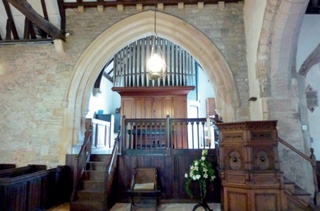 |
||
| The north transept with the refurbished and repositioned organ |
Remaining sections of wall panel were removed and incorporated into the new front to the organ platform. The platform front was fixed so that it can easily be removed for future cleaning and drying.
The movement of loose furniture as the water entered the church caused some damage to the chancel floor. The thin floor screed, which had been made to resemble stone paving, was replaced with more robust stone paving on a limecrete base.
Some of the decayed oak kerbs around the pew platforms were replaced with part-seasoned oak. Open joints in the masonry were repointed and walls redecorated with limewash.
The furniture required more extensive repair and the redundant pews were salvaged to repair the rest of the pews. All furniture was cleaned and polished.
The bulk of the work was completed in October 2008 with the electrical and repair works the first to be finished. The furniture repairs were finally completed in 2009. The work had to be carried out in stages as the furniture restorer was in great demand from others affected by the same floods. The organ was finally rebuilt in mid 2009.
The clean up and remedial works were time consuming and involved complex logistics (especially the movement and storage of furniture) and a great deal of administrative work (from obtaining approvals for the works to negotiating costs with the insurance company). The church could not be used during this period but the end result is a more flood-resilient building. The organ setting is greatly improved and the east end of the nave is a more functional space. The interior of the church has been given a real lift as the cleaning and polishing of the pews and furnishings has harmonised what was a rather motley collection of furniture.
Flood planning
Following the 2007 flood, the church devised
a flood strategy and is currently considering
whether it should be on the EA’s automated
warning system (the floodwaters reached
the east end of the church again in 2008, but
fortunately did not enter). The flood strategy
will set out the sequence of actions to be taken
in case of flood, including:
- agreeing a chain of command for raising the alarm
- mobilisation of and guidance for volunteers
- sandbagging, moving loose furnishings, unbolting the fixed pews to raise them on to the organ platform or removal to suitable temporary and storage
- keeping a record of emergency contact details (insurer, architect, etc)
- preparing an inventory of items and their condition
- creating a photographic record of the building and contents.
The document will be reviewed regularly at PCC meetings and passed to successive churchwardens to ensure continuity.
No emergency will go exactly to plan but if there is a plan for each of the key stages and a regularly updated checklist of necessary actions, the impact on the building and its contents can be mitigated. The burden of the recovery can also be distributed among those responsible for the building’s care and management, reducing the risk of confusion and ensuring a faster and more effective response.
Recommended Reading
Association of British Insurers and the National Flood Forum, Repairing your Home or Business after a Flood: How to Limit Damage and Disruption in the Future, 2006
Cabinet Office, The Pitt Review: Learning Lessons from the 2007 Summer Floods, London, 2008
English Heritage, Climate Change and the Historic Environment, London, 2008
S Garvin et al, Standards for the Repair of Buildings Following Flooding, CIRIA, London, 2005
English Heritage, Flooding and Historic Buildings, 2nd edition, London, 2010
B Ridout, Timber Decay in Buildings: The Conservation Approach to Treatment, E and FN Spon in association with English Heritage and Historic Scotland, London, 2000
Useful Websites
The Environment Agency (includes interactive flood maps by postcode) www.environment-agency.gov.uk
The Met Office (forecast and archive data on weather, rainfall and temperature) www.metoffice.gov.uk
The National Flood Forum (includes ‘Beginner’s Guide to Flooding’ fact sheets) www.floodforum.org.uk
The UK Climate Impacts Programme (guidance on the impact of climate change) www.ukcip.org.uk