
Inspired!
Simon Thurley outlines how current reforms and English Heritage's Inspired!campaign will help cash-strapped churches in England
 |
|
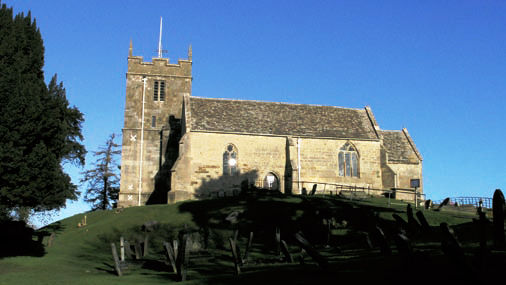
| St Bartholomew, Churchdown: years of structural problems are now being addressed with the help of grant-aid |
In May English Heritage, supported by all the major denominations, launched the Inspired! campaign aimed at raising public awareness of the issues facing congregations all over the country in looking after their listed places of worship. The principal issues are the challenge of repairing and maintaining the fabric of the buildings and the need to accommodate new facilities and new uses within them, to make them 'fit for purpose' for the 21st century. In most cases these issues have to be dealt with by members of the congregation who are not paid for the work and have no specialist training.
Recent research suggests that around £185 million needs to be spent each year on repairing listed places of worship in England, far more than is currently being spent. This finding supports some anecdotal evidence suggesting that with larger repair bills and fewer grants available, the number of congregations failing to get on top of their repairs is growing. The falling numbers of clergy in all denominations and the general decline in membership of congregations are obvious factors behind this problem. Yet at the same time, surveys suggest that 84 per cent of the population visit a place of worship at least once a year, many want to see these buildings in greater community use and most do not want to see the buildings closed. With such support it ought to be possible to secure a sustainable future for these buildings, in spite of the costs of maintaining them.
Congregations currently find about £67 million per year for repairs and are offered a further £40 million in grants, leaving a huge shortfall of around £78 million. How can this shortfall possibly be met? English Heritage and the Heritage Lottery Fund jointly operate the largest grant scheme for repairs, but with English Heritage's funding from Government not keeping up with inflation and lottery funds under severe pressure there is no prospect of the scheme being able to meet the increasing cost of repairs. Average grants are steadily rising (in 2005 it was over £74,000) but that means that we can reach fewer and fewer places of worship each year. In 2005 we helped just over two per cent of the 14,500 listed places of worship.
It is unrealistic to expect the Government greatly to increase its funding of repairs straightaway - and indeed, the right contractors and the match-funding from congregations cannot easily be found. We are, however, proposing some extra funding, in recognition of the importance to the public of England's historic places of worship, which will stop the repair bill growing still further. Two million pounds would fund maintenance grants for the most needy congregations, preventing the build-up of problems such as blocked gutters and slipped slates which create the major repair bills in the longer term. Another £4 million would provide funding for smaller scale and preventative repairs, such as the overhaul of windows, which are not a priority under the present English Heritage/Heritage Lottery Fund grant scheme, but which are nevertheless essential.
It would be a mistake to suppose that all historic places of worship are in the same position. While some congregations have to make great efforts simply to keep their building in good repair, others have expanding congregations or widening community activity and are seeking to adapt their place of worship for new forms of worship or other uses. Changes to listed buildings are often seen as a threat to the character for which they were listed. However, well managed changes are necessary if the buildings are to have a viable use and continue to be 'fit for purpose'. The challenge is to make alterations without damaging the special historic interest of the building.
This challenge comes at a time when the whole means by which the historic environment is managed and protected is under review by Government. The Government's Heritage Protection Review has three core proposals:
- a new unified register of historic sites will bring together the current designations so that all those affecting a church, its associated structures and churchyard are seen as a single entity, including its listed building and scheduled monument designations
- a reformed heritage consent regime for dealing with proposed works to historic sites. Streamlining the current system of parallel consent procedures for listed, scheduled and registered sites will make it easier for applicants to understand and quicker for applications to be dealt with
- voluntary Heritage
Partnership Agreements that provide an alternative management
regime for large, complex sites, such as cathedrals and their
precincts or groups of historic assets of a similar type in dispersed
locations, such as parish churches in a deanery or archdeaconry.
HISTORIC ASSET RECORDS
The unified designation base will underpin the whole reform programme and the Inspired! campaign proposes re-writing the old list descriptions of all the (current) Grade I places of worship as new Historic Asset Records (HARs). These will be grouped together where necessary to form Register Entries so that a group of buildings or structures, such as a church and the tombs in the churchyard, along with the archaeology on the site, are related in the register. Every HAR will be fronted by a digest that concisely and clearly sets out what it is that makes the site worthy of designation. (It should be noted that these are summaries and not definitive inventories; detailed discussions about pews for instance will still be required.) English Heritage already employs summaries of importance for designations under the existing system and feedback has indicated that the increased openness and clarity is appreciated, as is the sharper definition of what is and is not designated. The form of the new designations still needs to be refined further.
Unlike the existing list descriptions (saving the most recent ones) which are for identification purposes only, the new designations will provide a sound, and shared, understanding of the claims to special interest of historic sites. The current descriptions are of little help to the layman because they make no differentiation between elements of the building, some of which are of greater significance than others. Spelling out the exact significance of certain parts of the building and site will discourage proposals that are clearly damaging from ever being created, while at the same time revealing the potential of the building as a whole. This includes, for the first time, an integrated assessment of the site including archaeological issues and the setting of the building. We believe that if congregations have a better understanding of what is special about their building they will be better equipped to look after it. There are clear overlaps here with the existing insistence in the Church of England on parish statements of significance, something we have long supported.
HERITAGE
PARTNERSHIP AGREEMENTS
Another key
proposal of the Heritage Protection Review in England is the introduction
of Heritage Protection Agreements (HPAs). These voluntary agreements
will provide an alternative management regime for large, complex
sites, such as cathedrals and their precincts or groups of historic
assets of a similar type in dispersed locations, such as parish
churches in a deanery or archdeaconry. They have the potential
to ease the burden on churchwardens, property stewards and the
like. Within a strategic framework, and with the relevant parties
engaged in the agreement, a considerable amount of pre-agreed
work can take place without the need for specific consents. Further
work is needed at both strategic and local level and this must
include input from all relevant parties, including amenity societies.
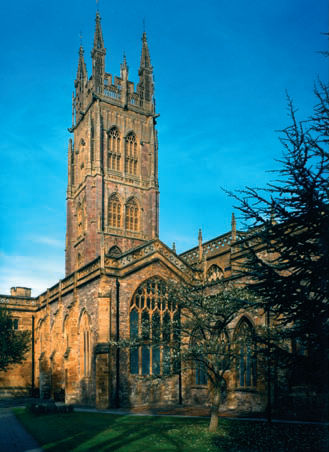
The exact implications of the proposed new system for ecclesiastical sites and buildings are being tested by pilot schemes at two cathedrals - Canterbury and Rochester, and the Taunton deanery in the Church of England diocese of Bath and Wells. The pilots will help to develop the new designations and HPAs. They will also test how the exemption enjoyed by certain ecclesiastical buildings might be adapted to embrace the new arrangements, with a particular emphasis on the potential of HPAs. Early in 2007 we expect the Department for Culture, Media and Sport to publish a White Paper setting out its conclusions about the way ahead, including the necessary legislative changes.
SUPPORT
OFFICERS FOR LOCAL CHURCHES
Although many,
usually urban, churches have already been adapted to allow for
increased community use or voluntary activity, many congregations
do not have the skills and resources to attempt such a scheme.
In some cases that can make the difference to the survival of
the building as a place of worship. To tackle this problem, the
Inspired! campaign encourages denominations to create dedicated
support officers at either local or national level to advise congregations
at historic places of worship. These new posts will need to be
tailored to fit local needs, but essentially there would be two
elements to their work.
The first element would be to take a strategic approach to the buildings in a diocese or other administrative area, identifying those places of worship which are too historically or architecturally important to lose, those which must be made a priority for repairs, those which might accommodate new uses and those which could go out of use for worship without serious consequences for their heritage value. Combining this information with the mission needs of the denomination will enable decisions to be made about which places of worship are most in need of support and what sort of support they need.
The second element would then be to guide and advise those congregations in looking after their buildings, managing repair projects and developing the potential of their buildings. We have already helped to create and fund such posts in three Church of England dioceses with successful results. Two million pounds would allow English Heritage to part-fund 15 new posts and provide training for the new officers, local authorities and congregations.
 |
|
| St Mary, Taunton: one of the churches involved in a Heritage Protection pilot project |
INSPIRED
SOLUTIONS
In the Inspired! campaign, English Heritage has proposed a practical, realistic,
forward-thinking plan of action to help congregations and others
with responsibility for historic places of worship to face the
challenges of the 21st century. We are putting forward five solutions
to improve the capacity of congregations to look after their historic
buildings and to stop the repair bill growing. The five solutions
require a modest extra investment from the Government of £26.52
million over three years. English Heritage has made this an integral
part of its bid for funding for 2008-2011 and we hope to receive
confirmation of the Government's support for the campaign when
our future funding is announced next year.
Solution 1 To re-write the list descriptions of all Grade I places of worship in plain English, so that congregations can better understand the heritage value of their buildings, and where appropriate be able to plan acceptable changes to make them 'fit for purpose' for 21st century use.
Solution 2 To help congregations to help themselves by appointing advisers (within the denominations or other local organisations), who can offer support and practical help to get repair and alteration projects under way. Such people could pursue the 'local building audits' that the Church Commissioners have recently recommended to dioceses and deaneries.
Solution 3 To create a maintenance grants scheme to shrink repair bills in the longer term. Two pilots, in London and Suffolk, have already shown how a centralised administration can enable congregations to get their basic maintenance done efficiently and economically.
Solution 4 By increasing the amount available for repair grants by £4 million a year, we would be able to create a new, simple scheme to get the smaller works done at the most needy buildings and so prevent that minor repair turning into a major, expensive crisis.
Solution 5 We must safeguard the organisations that look after the most architecturally and historically important buildings that cease to be used for worship. The Churches Conservation Trust (funded by Government and the Church Commissioners) has had its income frozen for some years, yet it is still expected to take on more churches. The Historic Chapels Trust and other smaller trusts around the country are dependent on English Heritage and Heritage Lottery Fund grants to complete their major repairs, but with lower sums from Government and the Lottery, competition for those grants is very great.
For too long the huge cultural and community value of these buildings has been overlooked and underestimated. This is the first, strategic attempt to tackle the problems facing historic places of worship and we hope as many readers as possible will feel able to support it.
For further information: www.english-heritage.org.uk/inspired. For a copy of the campaign booklet, please contact 0870 333 1181.