
Damp Towers
an overview
Liz Laycock and Maria-Elena Calderón
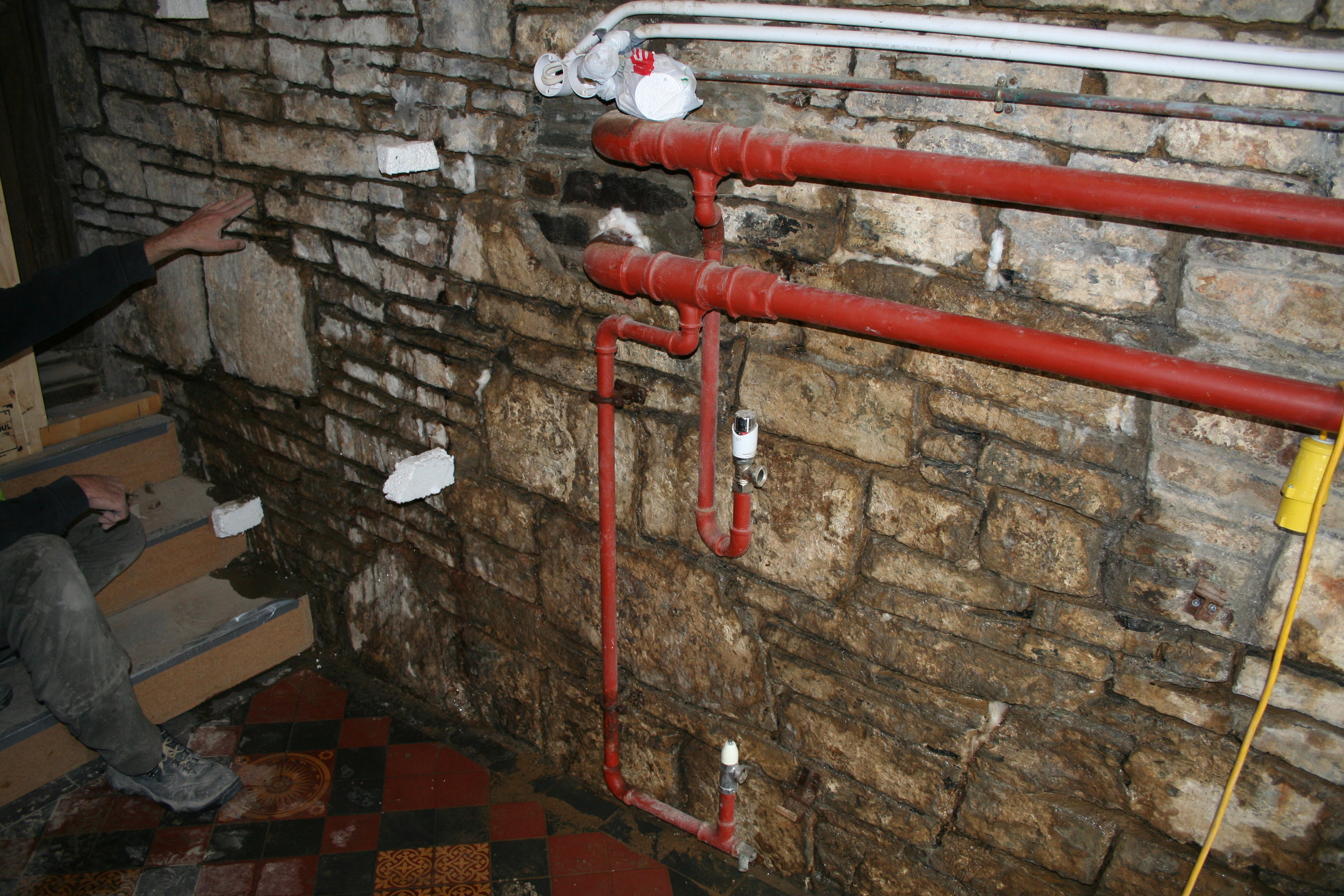
|
| St John the Baptist, Stowford, Devon, showing the severe rain penetration common to the exposed towers under consideration. (Photo: Historic England) |
RAIN PENETRATION is a problem for many buildings; it can mobilise harmful salts and support the growth of unsightly algae and biofilms that can pose health risks. As well as damaging internal surfaces, damp makes buildings cold and sometimes even unusable.
Throughout the late 20th century, it had been noted that many church towers in south-west England suffered from rain penetration but that the often-costly attempts at remediation had failed to solve the problem and, in some cases, had made it worse. With the annual average rainfall for south-west England over twice that of the rest of the country (BS8104:1992), the towers were already facing challenges from the weather and they also needed to be resilient against climate change.
There were clearly some common factors; many of the towers had lost their original external surface finish (the fashion for stripping masonry walls of limewash and render that began in the 1820s, spearheaded by Pugin and the Ecclesiologists, has persisted to the present day); and there were other issues such as voiding in the core of the wall, poor specification, poor workmanship and the use of inappropriate materials and techniques. However, neither causes nor best practice for remediation were clear.
In 1989, English Heritage (now Historic England) initiated the Damp Towers research project to investigate these problems. The integrated programme of laboratory testing, field trials and site monitoring that followed continues to this day and is the longest on-going building conservation research project undertaken by Historic England.
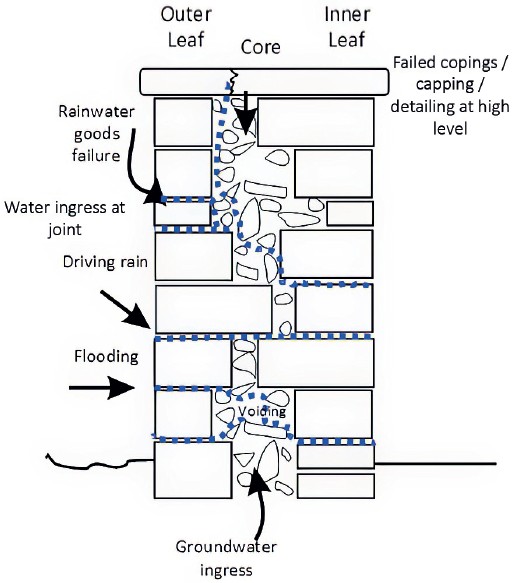 |
| Paths by which liquid water can enter into and travel through a masonry wall. (Diagram: authors’ own) |
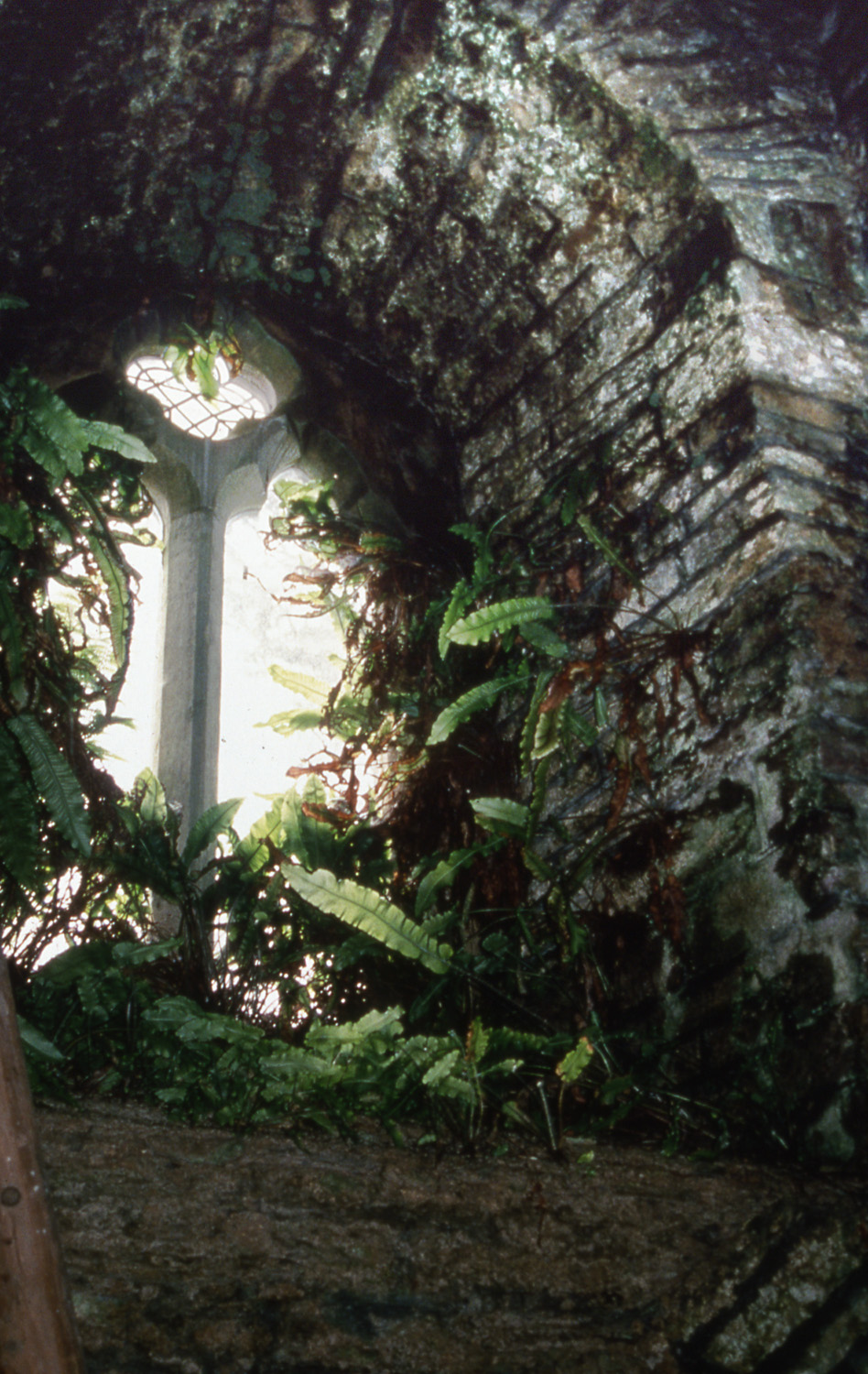 |
| The tower of Holy Trinity Challacombe, Devon, was so damp that ferns were growing on the interior and the church was unbearably cold and damp. (Photo: Historic England) |
During the early phases of the research, the ability of lime render to reduce driving rain penetration was clearly demonstrated. However, this finding has – on the whole – failed to change the attitude and approach of many building owners and custodians who prefer the appearance of exposed masonry, and even some conservation professionals support this view. There is of course, a small minority of buildings where the masonry was not originally intended to be covered, and where applying render or limewash would unacceptably harm significance. But there is an increasing body of evidence (both documentary and from surviving building fabric) that the majority of solid-walled masonry buildings in the UK were either rendered or limewashed historically; for such buildings, reinstating a traditional finish is likely to bring technical benefits and restore the original appearance.
As some parts of the UK are experiencing more intense rainfall events as a result of the changing climate, the need for remedial work to deal with rain penetration looks set to increase, so it seems timely to review the findings of the early phases of the Damp Towers and remind ourselves about the benefits of lime render. Although initially focussed on church towers, the findings are relevant to other building types suffering from rain penetration, particularly in areas of high exposure.
Initial Investigations
In 1989, in response to requests for advice, Iain McCaig of English Heritage investigated seven church towers in Devon with bare masonry towers suffering from rain penetration. His report concluded that the main problems were their exposure and their dependence on the mortar joints alone for moisture buffering of the construction due to the impermeable nature of the stone. He attributed most of the moisture penetration to failure at the joints, which appeared to be exacerbated by shallow pointing using impermeable materials that had cracked and de-bonded. Several potential solutions were presented, including deep pointing, grouting, lime rendering, replacing cement mortars internally with lime and improving ventilation.
However, the report noted there was no data to indicate which of these would be most effective. There was little scientific literature that specifically targeted solid walls: most research had focused on cavity wall construction. Furthermore, the historical records were not always clear about repairs and interventions. Weather records were often generalised rather than specific to the individual site and differences in architectural detailing around each building could make the situation more complex within each structure.
As a result of these field studies, in 1996 English Heritage commissioned a programme of field and laboratory research. The aim was to determine how water enters and migrates within solid walls and identify which remedial treatments could effectively minimise water ingress, and ideally also maximise drying following periods of wind-driven rain (WDR). It was hoped that the work could also provide information on driving rain through stone, mortar joints and renders, and provide general information on the performance of different mixes for mortar, rendering and plastering.
Field and Laboratory Research
Although the research included field studies, there are obvious difficulties in carrying out detailed investigations on sensitive historic fabric; many of the buildings were still active places of worship and some were listed Grade I. Also, while the towers shared some features such as the use of impermeable stones and composite walls, each was unique. There were considerable variations in the stonework type (ashlar, rubble, slate), joint width and mortar type, state of weathering, tower design, level of maintenance and previous interventions and the height, altitude, and aspect of the buildings.
The common repair methods applied to existing structures exposed to WDR were reviewed and, as a result, the research focused on pointing, rendering, plastering and grouting for void filling. A number of other repair options (such as slate hanging, tree screening and internal drainage) fell outside the remit of the work and were not considered. Approaches focused on evaluating moisture content within the masonry walls and the quality and condition of the wall facing and rubble core, followed by lime-based repair using rendering, plastering, pointing and grouting techniques. Field work was also undertaken, including rendering the tower of the church of the Holy Trinity, Challacombe, on the edge of Exmoor. It should be noted that, at the time of testing, natural hydraulic lime (NHL) was considered the optimum choice of binder for exposed mortars, but it is now recognised that its use will have distorted some outcomes.
Given the difficulties of field research and the lack of existing research on driving rain, it was decided to develop an intensive programme of laboratory investigations. This research was based at Sheffield Hallam University, where a number of different strands of enquiry were pursued using a combination of methods.
Laboratory Simulation
A climatic simulator was adapted to enable the simulation of WDR on one side of the test walls and various sensors (existing and innovative) were deployed to collect data. It was accepted that it can be difficult to replicate complex historical structures in laboratory settings, so a skilled stonemason (the late Colin Burns) was called on to build the walls.
Pilot phaseDuring the pilot phase of research, five wall panels were constructed. Each measured half a metre by one metre and was built with diorite setts of varied sizes (average dimension of approximately 100 mm x 100 mm x 150 mm). Mortar was well-graded aggregate mixed with NHL 3.5. Rain simulation delivered water at a rate of 0.5 litres per minute per square metre for six hours at a pressure of 25 mm H2O standing (the equivalent of a wind speed of 20 metres per second). In addition to sensors, visual logging was used to provide qualitative data to aid interpretation.
Five wall panels were constructed of an internal and external skin with through-stones, giving a wall thickness of 150 mm.
- Panel 1: Panel rendered with NHL mortar, given a smooth finish
- Panel 2: Panel with eroded NHL mortar joints
- Panel 3: Panel rendered with NHL mortar, given an open textured finish
- Panel 4: Panel with defective cement-pointed joints
- Panel 5: Control panel, with good NHL mortar joints
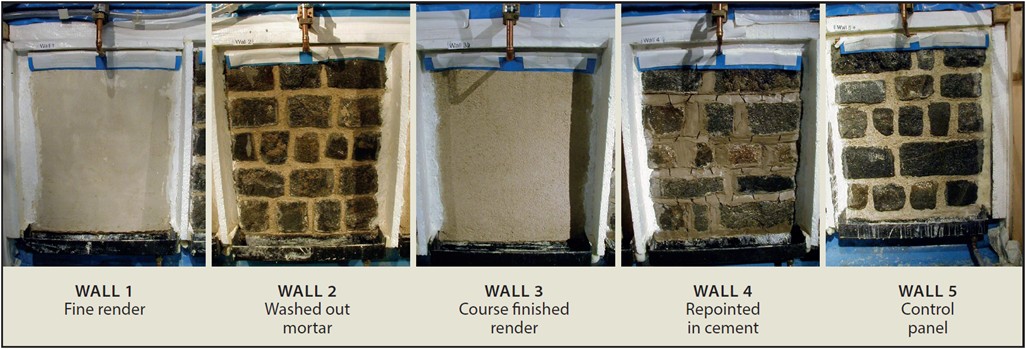
The five test-panels in the laboratory at Sheffield Hallam University (Photo: SHU and Historic England)
One surprising outcome of this initial work was the unexpectedly quick water penetration through to the rear of the panel. All panels leaked within six hours, and resulted in free water running down the back (interior) face despite the relatively low wind speed and realistic rainfall profile. Two runs of testing confirmed good performance from both rendered walls, with the smooth render performing slightly better. The panels repointed with NHL and cement mortar and the control panel performed less well.
Main phaseHaving proved the experimental concept, it was now possible to refine the work and create a more realistic construction composite to address the unexpected rapid wetting of the thin walls. Larger scale walls, 420mm thick, were built onto high-capacity weighing scales to track changes in wall weight during wetting and drying cycles, and a two-year testing program was initiated to understand the variable performance of the individual walls by comparing performance before and after intervention.
The first two walls were built as ‘best practice’ using the same setts as the pilot work. Later, two additional walls were built with voids to mimic features seen in historic towers. One had large cavities constructed using temporary forms to create both continuous and discrete voids in the core. The other had areas of gravel in the core, to mimic mortar washout without significant cavity formation.
All four walls were then tested to determine their baseline performance, after which they were treated as follows:
- an external NHL 3.5 render (walls 1, 3, and 4) applied
- a non-hydraulic lime putty render (wall 2) applied
- an external render plus an internal lime putty plaster (for walls 1 and 2 only) applied
- render removed but the voids grouted (walls 3 and 4) using the recorded location of voids to guide the process.
Both rendering and plastering consisted of two 10mm coats, with the lower coat being 1:3 and the top coat 1:2½ binder-to-aggregate by volume.
All the walls were then tested again. At the end of the experiment, dye penetration testing followed by dismantling was used to better understand water transfer pathways through the walls.
Results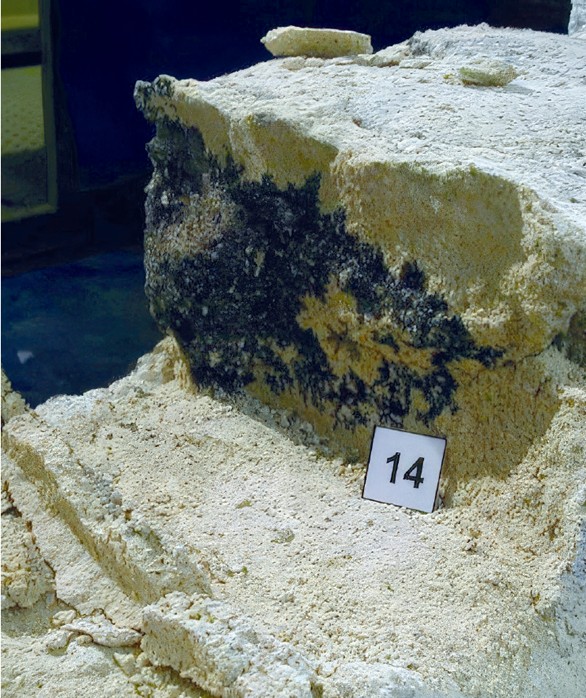 |
| Result of dye penetration testing of Panel 5. The black colouration is along the plane where mortar perpend meets block and not evenly distributed throughout the joint (Photo: SHU and Historic England) |
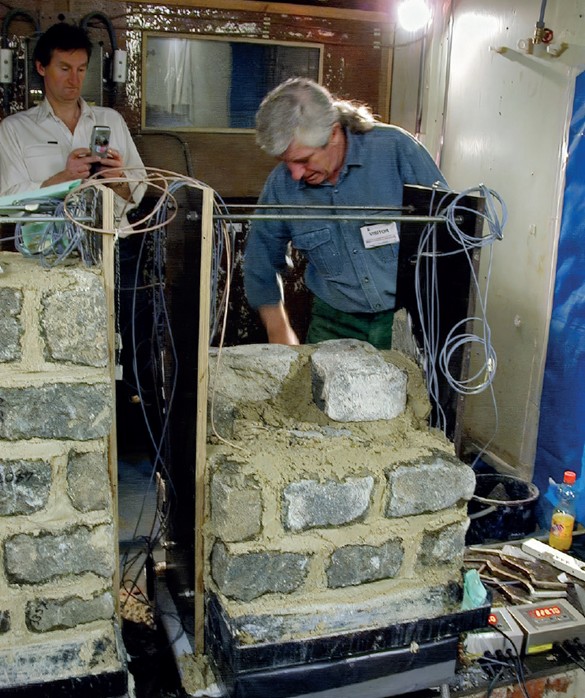 |
| Building the cored walls for Stage 2 of the laboratory tests. (Photo: SHU and Historic England) |
The more realistic walls performed in a markedly different way to the panels used in the pilot. In all walls an initial period of rapid uptake of water was followed by reduced rates of absorption. While changes in total weight confirmed that rain was entering the wall, there was no free water in the central collecting trough at the base of the wall, nor did water appear on the rear internal face of the wall. The rendered and plastered walls (walls 1 and 2) remained well below saturation, even after 18 days of simulated WDR. While water uptake between these two walls was similar, it was not identical. Application of renders significantly reduced the rate of uptake, although it did not completely prevent it with the lime putty render having a slightly larger water uptake than the NHL. The walls acted as sponges, preventing the relatively small volumes of water from appearing at the rear of the wall as free water.
An unexpected finding was that the voided walls appeared to hold a smaller volume of water than the good-quality walls. This can be attributed to the voids breaking the liquid transfer pathways, coupled with the redirection of some of the penetrating water. For the purposes of the research, this meant that the solid and voided walls could not be directly compared with each other. In the field, over time it is likely that washing out of cores would create internal water storage and additional drainage pathways in walls, which would then act to channel volumes of water into the internal skin; a previously sound tower might begin suddenly to show significant dampness. Through voided walls, the ingress paths are extremely complex: water can pond and saturate capillaries and subsequently flow through the wall; there is also effectively less continuous wall thickness. This led to the same situation as in the initial pilot construction and all walls of this type were found to leak to some extent.
Applying render to the voided walls reduced water uptake significantly but did not entirely eliminate it. Similarly, grouting was demonstrated to reduce the uptake of water in the voided walls, but not to eliminate it completely. Moreover, even at this small scale and with the void locations known, grouting proved difficult. Post-test dismantling revealed that while most of the large void spaces had been filled, a significant number of smaller voids were left without grout due to a lack of connectivity with the main areas treated. It was also clear from observation that rain was tracking through the holes drilled to insert the grout.
Drying tests were inconclusive but suggested that the wall with lime putty render dried marginally faster than the un-rendered walls, which in turn dried faster than the wall with NHL render. It is almost certainly due to the reduced ability for moisture to dissipate through NHL mortars, although more field work would be needed to confirm this result.
Dye penetration tests followed by dismantling indicated that water taken into the wall was not absorbed homogeneously but rather was concentrated at the interfaces between block and mortar. Poor bonding here could lead to formation of capillaries able to absorb WDR, particularly where the blocks are of low permeability. However, it was found that this failure did not manifest for a considerable time. Unsurprisingly, this is more typical of mortars made with NHL binders.
Conclusions
This work highlighted the importance of regular maintenance and proactive repair strategies for historic masonry structures. It is clear that the historic removal of traditional renders from solid masonry structures will have increased their vulnerability to driving rain and that, over time (compounded by periods of inadequate maintenance or poor repair decisions), the subsequent rain penetration will have created voids and other failures that will have exacerbated rain uptake still further. Once a wall core has become voided, it is much more susceptible to rainwater penetration and thus free water is more likely to appear on the interior.
Although the optimum treatment for any particular building must depend on a number of factors including aesthetics, the Damp Towers research has greatly increased our understanding of the factors influencing long-term behaviour of different types of repair. These factors should be a critical consideration when developing programmes of conservation. Laboratory testing strongly indicated that rendering with a lime-based mortar is the most effective way of lowering the rate of water absorption. This accords well with the field results at Holy Trinity, Challacombe, where rendering the tower produced a dramatic reduction in damp and an equally dramatic improvement in the interior conditions and usability of the building. It also corresponds with the results of recent research by Tim Meek at the University of Stirling, which sheds light on the role of external/internal pressure difference in water penetration in bare stone buildings and the efficacy of lime render in moderating this. The research also showed that there appears to be a case for internal lime plastering.
For buildings where rendering is considered unacceptable, and the masonry is to be repointed, it is critical to consider compatibility between the masonry units and the repointing mortar. While grouting may deliver some improvement to voided walls, it is a very complex, expensive and difficult intervention which, if badly carried out, may exacerbate rather than reduce WDR problems, and could be risky in walls where the bedding and core mortars are made of subsoil. Recent evaluation of a number of churches that have been grouted have indicated that some still have ongoing problems of water penetration.
Next Steps
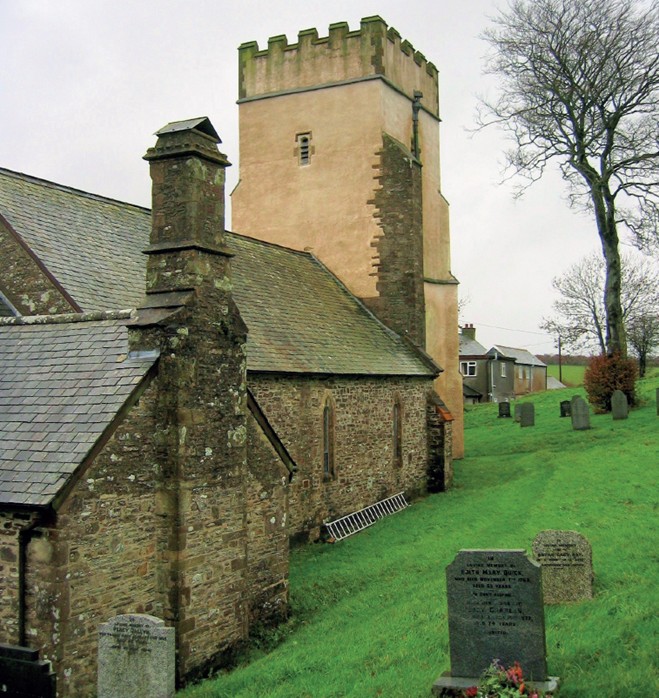
|
| The tower of Holy Trinity, Challacombe, Devon: although initially rather bright, by 2004 (six years after completion), the render had started to tone down. Subsequently, despite some of the limewash weathering away, the render continues to perform well, creating a much drier internal environment. |
The mortar mixes used in the laboratory testing at Sheffield Hallam were informed by standard practice at the time, when NHL mortars were widely considered to be the optimum material for use in exposed conditions. This was before research into the properties of NHL mortars was carried out by Christiano Figueiredo at the University of Bath, and before work by David Wiggins at Glasgow Caledonian University which demonstrated the benefits of lime-rich non-hydraulic lime mortars in moisture transport and dissipation. Work by Nigel Copsey and others has also demonstrated that many traditional surface coatings contained very high proportions of lime binder. Current testing at Sheffield Hallam on solid brick walls bonded and rendered with hot-mixed non-hydraulic lime mortar has demonstrated its excellent resistance to floodwater penetration. For buildings suffering from rain penetration, it seems likely that even greater benefits than those seen in the Damp Towers laboratory research could be delivered using lime-rich traditional renders and plasters. It also seems likely that such traditional lime-based finishes could improve the thermal performance of solid masonry walls, but to date there has been little research to quantify the benefits. A new phase of the Damp Towers research by Historic England will therefore focus on the impact of traditional lime-rich surface finishes to help create drier, warmer walls.
The authors of this paper have summarised the work of many people and organisations over the seven years of the project and would particularly like to acknowledge English Heritage (the research was led by Chris Wood, then Head of Building Conservation and Research Team), Steve Hetherington of Sheffield Hallam University, the University of Oxford, Colin Burns, and Ridout Associates.
Source
The Building Conservation Directory, 2024
Author
LIZ LAYCOCK is Professor of Stone Conservation at Sheffield Hallam University. Her research interests are in assessment of the properties and performance of geomaterials.
MARIA-ELENA CALDERÓN is Principal Building Conservation Advisor at Historic England, Chair of the IHBC Yorkshire Committee and their representative on Council. She is also Vice Convener of the Building Limes Forum.
Further information
RELATED ARTICLES
RELATED PRODUCTS AND SERVICES