Basic HTML Version



1 4 8
t h e b u i l d i n g c o n s e r v a t i o n d i r e c t o r y 2 0 1 2
4.1
Figure 6 Empty moth cases on upholstery
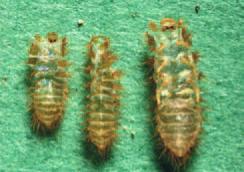
Figure 7 Cast skins of varied carpet beetle larvae
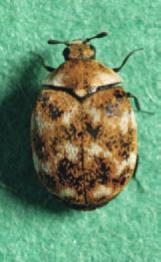
Figure 8 Adult varied carpet beetle
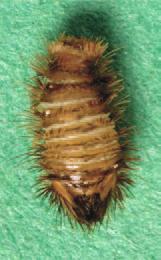
Figure 9 Varied carpet beetle larva or ‘woolly bear’
Monitoring
Early detection of insect attack obviously
helps minimise any damage and allows a swift
response to the infestation. Insect traps can
be valuable in catching flying and crawling
insects, allowing them to be identified and the
severity of the attack assessed. Sticky blunder
traps are the most successful at catching a
wide range of insect pests, as many insects
such as clothes moths are not attracted to
light or ultraviolet traps.
Where the insect species is known
accurately, pheromone traps can be used.
These are sticky traps which use the female
sex pheromone of the species to attract males.
They are commonly used for webbing clothes
moth but are also available for case-bearing
clothes moth and some carpet beetle species.
Although very efficient, they should only be
used as an enhanced trapping system, not a
control measure.
Treatments
Where some form of insecticidal treatment is
necessary, the problem needs to be assessed
in terms of the efficacy of the treatment,
possible adverse effects on the inhabitants of
the property and possible damage to objects
through staining, etc.
Recent changes in legislation through the
Biocides Directive (European Union Directive
98/8/EC) are having an effect on the treatments
and materials that can be used. Many
traditional insecticides such as mothballs are
now banned and others are likely to follow.
Museums and historic houses are increasingly
using non-toxic treatments such as deep
freezing and heat. Sealing infested carpets or
wool clothing in plastic bags and freezing them
at -18°C for two weeks will kill all stages of
insect life. Heating objects to 55°C+ will kill all
insect stages in an hour but great caution must
be taken to ensure the objects are not damaged
by the very dry hot air. The Thermo Lignum
heat process uses heat and controlled humidity
in a chamber to avoid damaging objects.
Domestic treatments include the use of
residual sprays containing insecticide such
as permethrin around the edges of carpets,
under furniture and in other vulnerable areas.
Hanging sachets which give off an insecticidal
vapour can be used in enclosed spaces such
as drawers and wardrobes. Commercial
treatments can include the use of insecticidal
smoke generators or ‘fogging’ with an ultra-low
volume insecticide. Although these have value
in killing adult moths, they do not penetrate
into the textiles. Targeted use of Exosex, a
pheromone-based system that disrupts moth
mating, can be effective in reducing moth
numbers in large, difficult to treat buildings.
Conclusion
With fewer cold winters and more warm,
centrally heated buildings, clothes moths and
carpet beetles are becoming an increasing
problem with faster breeding cycles. More
insects per year are produced and the warmer
conditions allow them to fly or crawl further
and higher, spreading infestations into areas
not previously attacked.
Prevent moths and beetles causing
damage by:
• good housekeeping, particularly
in dark and undisturbed areas
• regularly checking stored
vulnerable materials
• monitoring with insect traps
• ensuring pests are correctly identified
• using targeted treatments against
insect infestations when they occur.
Recommended Reading
DB Pinniger, Pest Management in Museums,
Archives and Historic Houses, Archetype
Publications, London, 2001
DB Pinniger, Pest Management: A Practical
Guide, Collections Trust, London, 2008
Robert Child
is a former head of
conservation at the National Museum of
Wales where he specialised in preventive
conservation of historic collections. He
is the National Trust’s advisor on insect
pest control and has his own insect pest
consultancy, Historyonics.
David Pinniger
is an entomologist who
advises English Heritage and many museums
and historic houses on pest identification
and pest management.