Basic HTML Version


t h e b u i l d i n g c o n s e r v a t i o n d i r e c t o r y 2 0 1 2
1 4 7
4.1
4.1 Services & Treatment :
Protection & Remedial Treatment
clean one. Damage is also more concentrated
in dark and hidden areas so that in clothing,
for example, it is likely to occur in crevices
and creases, behind lapels, in pockets or
where things are folded. In carpets, clothes
moths will usually be found under heavy
furniture or at the undisturbed edges. Clean,
cotton materials are not normally at risk from
attack by clothes moths but the larvae will
eat holes in the cotton coverings of feather
cushions if the fillings are infested.
Other moth species
Other common moth species which can be
confused with the clothes moth are the white-
shouldered house moth (Endrosis sarcitrella)
and the brown house moth (Hofmannophila
pseudospretella). Both of these species are
common in birds’ nests and will only cause
damage to materials stored in damp and
dirty conditions. The Indian meal moth
(Plodia interpunctella) is commonly found in
domestic kitchens, but this species will only
attack food such as cereals, nuts and dried
pet foot.
Carpet beetles
The most damaging species of carpet beetle
found in the British Isles is the varied carpet
beetle (Anthrenus verbasci). Adult beetles are
2–3mm long and resemble small ladybirds.
They are covered with grey and gold scales
(Figure 8) and identification of the species
is based on the pattern and shape of these
scales. Adult beetles fly well in warm weather
and may frequently be found on windowsills.
In the British Isles they are found outside in
later spring and early summer where they
mate on flowers such as hogweed and Spirea
before they return indoors to lay batches of
eggs secreted in cracks and crevices.
The eggs hatch into short, fat, hairy
larvae, often referred to as ‘woolly bears’
(Figure 9). When the larvae first hatch they
are extremely small, less than 1mm long, and
they can gain entry to cupboards and drawers
through very small cracks. As the larvae grow,
they leave empty hairy, cast skins or husks
which are often the first sign of carpet beetle
attack (Figure 7).
The larvae will grow to 5mm long and
are voracious feeders which will rapidly make
holes in woollen textiles, animal specimens,
fur and feathers. They will also graze on
animal glue in book bindings and picture
frames. Clean cotton materials are not
normally attacked although larvae may bore
through them on their way out of a feather
cushion. The damage is often mistaken for
clothes moth larvae attack.
Carpet beetles are often found in natural
situations such as birds’ nests, wasps’ nests
and animal burrows and in some museums
and houses they have a direct route into the
premises from nests in attics and chimneys.
Once established, they can be difficult to
eradicate because the larvae can forage
widely and may take some years to complete
development. The normal life cycle is one to
two years.
There are other species of Anthrenus
which are similar in appearance and habits.
The most important of these is the Guernsey
carpet beetle (Anthrenus sarnicus). This is
now well established in London and South
East England and is causing increasing
problems in the rest of the British Isles in
houses and museum collections.
Prevention
Clothes moths and carpet beetles are
frequently found in birds’ nests and discarded
animal-based textiles, such as old carpets and
underlays in loft areas. The long-term solution
to infestations is to make sure that birds’ nests
are removed from attics and particularly from
disused chimneys. This should be done after
any nesting period has been completed. Roof
spaces should be cleared and cleaned and any
suspect material removed and destroyed.
Good housekeeping, through regular
cleaning, is the long term method of control
of insect attack in buildings. Good design that
allows inspection and cleaning of all areas is
also to be encouraged. Regular vacuuming
of carpets is essential, particularly along
skirtings and under furniture. Wool-based
clothing should be put into storage after being
dry cleaned or warm washed as clothes moths
prefer soiled material to clean.
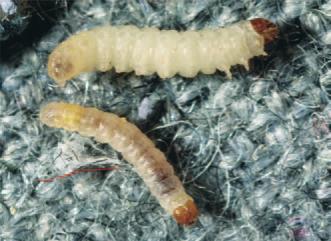
Figure 2 Webbing clothes moth larvae
Figure 5 Case-bearing clothes moth adult
Figure 4 Case-bearing clothes moth larva in case
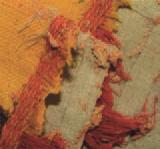
Figure 3 Frass and damage caused by webbing clothes moth
larvae