Basic HTML Version


3 6
t h e b u i l d i n g c o n s e r v a t i o n d i r e c t o r y 2 0 1 2
1
The movement of loose furniture as the
water entered the church caused some damage
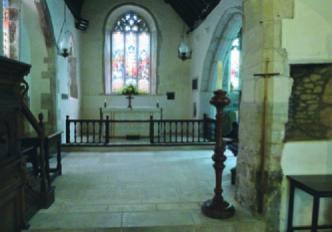
to the chancel floor. The thin floor screed,
which had been made to resemble stone
paving, was replaced with more robust stone
paving on a limecrete base.
Some of the decayed oak kerbs
around the pew platforms were replaced
with part-seasoned oak. Open joints
in the masonry were repointed and
walls redecorated with limewash.
The furniture required more extensive
repair and the redundant pews were salvaged
to repair the rest of the pews. All furniture
was cleaned and polished.
The bulk of the work was completed in
October 2008 with the electrical and repair
works the first to be finished. The furniture
repairs were finally completed in 2009. The
work had to be carried out in stages as the
furniture restorer was in great demand from
others affected by the same floods. The organ
was finally rebuilt in mid 2009.
The clean up and remedial works were
time consuming and involved complex
logistics (especially the movement and storage
of furniture) and a great deal of administrative
work (from obtaining approvals for the works
to negotiating costs with the insurance
company). The church could not be used
during this period but the end result is a more
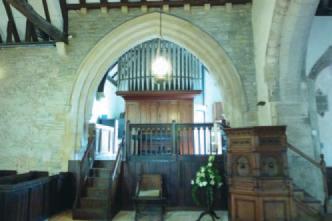
flood-resilient building. The organ setting
is greatly improved and the east end of the
nave is a more functional space. The interior
of the church has been given a real lift as
the cleaning and polishing of the pews and
furnishings has harmonised what was a rather
motley collection of furniture.
Flood planning
Following the 2007 flood, the church devised
a flood strategy and is currently considering
whether it should be on the EA’s automated
warning system (the floodwaters reached
the east end of the church again in 2008, but
fortunately did not enter). The flood strategy
will set out the sequence of actions to be taken
in case of flood, including:
• agreeing a chain of command
for raising the alarm
• mobilisation of and guidance for volunteers
• sandbagging, moving loose furnishings,
unbolting the fixed pews to raise them
on to the organ platform or removal
to suitable temporary and storage
• keeping a record of emergency contact
details (insurer, architect, etc)
• preparing an inventory of
items and their condition
• creating a photographic record
of the building and contents.
The document will be reviewed regularly
at PCC meetings and passed to successive
churchwardens to ensure continuity.
No emergency will go exactly to plan
but if there is a plan for each of the key
stages and a regularly updated checklist
of necessary actions, the impact on the
building and its contents can be mitigated.
The burden of the recovery can also be
distributed among those responsible for
the building’s care and management,
reducing the risk of confusion and ensuring
a faster and more effective response.
Recommended Reading
Association of British Insurers and the National
Flood Forum, Repairing your Home or
Business after a Flood: How to Limit Damage
and Disruption in the Future, 2006
Cabinet Office, The Pitt Review: Learning
Lessons from the 2007 Summer Floods,
London, 2008
English Heritage, Climate Change and the
Historic Environment, London, 2008
S Garvin et al, Standards for the Repair of
Buildings Following Flooding, CIRIA,
London, 2005
English Heritage, Flooding and Historic
Buildings, 2nd edition, London, 2010
B Ridout, Timber Decay in Buildings: The
Conservation Approach to Treatment, E and
FN Spon in association with EnglishHeritage
and Historic Scotland, London, 2000
Useful Websites
The Environment Agency (includes
interactive flood maps by postcode)
www.environment-agency.gov.uk
The Met Office (forecast and archive data
on weather, rainfall and temperature):
www.metoffice.gov.uk
The National Flood Forum (includes
‘Beginner’s Guide to Flooding’ fact sheets):
www.floodforum.org.uk
The UK Climate Impacts Programme
(guidance on the impact of climate change):
www.ukcip.org.uk
Ruth Nicholls
BSc(Hons) BArch (Bath)
Grad Dipl Cons(AA) RIBA is an associate of
Astam, a multidisciplinary practice with
architects, engineers and project managers
(see page 20). She is an architect and
designer specialising in the conservation of
historic buildings particularly churches and
is church architect for a number of churches
in the Gloucestershire Diocese.
The chancel with its new stone floor
The north transept with the refurbished and repositioned organ