Basic HTML Version



5 8
t h e b u i l d i n g c o n s e r v a t i o n d i r e c t o r y 2 0 1 2
2
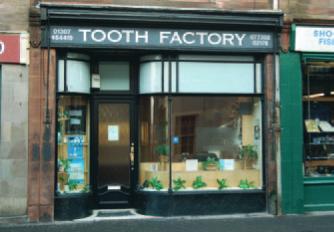
Tooth Factory, Forfar: A traditional shopfront with margin panes to the clerestory glazing, curved glass and black granite
stall-riser (Photo: Historic Scotland)
both shops and domestic properties. Others
adopted leaded glass, sometimes with mock
bulls-eyes or tracery bars and margin lights to
decorate otherwise plain glazing. Inevitably,
styles merged, changed and adapted to create
a myriad of variations within the streetscape.
Whether Moderne or more traditional
in inspiration, common features included
geometric detailing, integral blinds, decorative
stall-riser vents and window screens. These
screens were timber and glass which focused
the view of the customer on the goods in the
window but still allowed light into the shop.
Although it was architects who
experimented with the first undecorated
shops, it was shopfitters who brought these
new designs to the mass market. Firms
like Frederick Sage, E Pollard & Co and
Harris & Sheldon were leading designers
of exceptional shopfronts which broke
the mould of traditional shop design and
Sunrise motif to shopfront clerestory, Falkirk: The design was popular in the 1930s and was widely used in shopfront design.
Steel allowed even more possibilities than
its 19th century predecessor, cast iron. The
construction of Selfridges in 1909 with
its innovative steel frame and exterior of
Portland stone heralded a new approach to
department store construction.
While structural considerations were
clearly crucial, it was the exterior finishes
which created the necessary look. The last
two decades of the 19th century witnessed
the mass production of decorative tiles
for the first time. While these remained a
popular material for shopfronts into the
20th century, other materials crept into
the market and gradually usurped these
decorative ceramics. Cladding in marble,
terrazzo and Vitrolite became a quick
and easy way to transform a shop from
traditional Victorian to Moderne overnight.
A browse through Perry’s 1933 Modern
Shopfront Construction indicates the great
breadth of materials available to shop
designers in the 1930s. Travertine marble,
black granite, Roman Stone (a form of
artificial stone), bronze, embossed glass,
walnut and stainless steel. Green marble
proved to be particularly fashionable
and was widely used. These materials
were used in endless combinations to
allow either a minimalist, Art Deco-
inspired or more traditional style.
Of all of these, it was Vitrolite which
became the iconic fashionable material of the
1930s. It is described in Pilkington’s Vitrolite
Specifications as:
A Rolled Opal Glass ranging from
semi-opacity to complete opacity.
One surface is usually impressed
with a pattern of narrow parallel ribs
which provide a key for the mastic
or other material with which the
glass is fixed. The glass has a hard,
brilliant, fire-finished surface.
There were 16 colours available, ranging
from the standards of black, white, green
and turquoise to more exotic shell pink and
walnut agate.
Although its origins were as a practical
material for use in hospitals and also to clad
the Mersey Tunnel, it was a particularly
versatile material for re-fronting shops.
Available in a range of sizes and thicknesses,
the opportunity to use different colour
combinations and to utilise it with other
materials such as chrome allowed a mass
produced material to offer significant
individuality. While many shop owners opted
for a simple, classy look of black Vitrolite,
others were more daring, creating innovative
and striking designs inspired by the
geometric style of the Art Deco period.
Other fashionable glazing products
included etched or sandblasted glass. The
use of opaque glass was not new. In the
Edwardian period the use of delicately
etched glazing, often for entrance doors,
offered an air of elegance and sophistication
to shops. The name of the shop owner or
their trade reinforced the advertising of
the business. However, during the 1930s
the use of decorative glass was particularly
popular for the clerestory of the shopfront.
construction. They re-fronted shops and
offered specialist services such as showcases
and interior fittings. They paid little heed to
Victorian or Georgian parent buildings and
were sometimes severe in their execution. The
pursuit of a fashionable frontage surpassed
any consideration of the surroundings.
Shopfitters were highly innovative
and developed new products for their ever
increasing client base. E Pollard & Co, for
example, promoted a non-reflective glass in
the 1930s. This was installed in the new black
Vitrolite shopfront of T Fox & Co of London.
Complete with a red neon sign, the shopfront
was the height of fashion for this umbrella
business which was established in 1868.
Materials
During the early part of the 20th century the
introduction of new materials like steel began
to influence the construction of shopfronts.