Basic HTML Version


t h e b u i l d i n g c o n s e r v a t i o n d i r e c t o r y 2 0 1 2
1 3 9
3.4
3.4 Structure & Fabric :
External Works
attics and cellars that are dark, with stable
temperatures and humidity. These spaces may
be found in a range of structures including
farm buildings, historic houses, castles,
churches and terraced houses.
Bats are much smaller than people
tend to think; some species only need a
15–20mm gap to access a roosting space.
Most bat species cluster together tightly to
generate heat and, given that it’s possible
to squeeze about 200 pipistrelle bats into
a space the size of a shoe box, you can
imagine how difficult it can be to find bats
roosting in the dark corners of a building.
Bats do not make nests or chew electrical
cables. The most obvious sign of their presence
is bat droppings but even these can be hard
to find, especially in a loft. Bat droppings are
frequently mistaken for mouse droppings but
can be identified by the ‘crumble test’. Bat
droppings consist largely of insect remains
and crumble easily to a powder of semi-shiny
fragments. Rodent droppings are smooth and
plastic, quickly becoming hard. They cannot
be crumbled. The droppings of UK bats do
not present any known health hazards; they
can be swept up safely and make an excellent
garden fertiliser. Large accumulations may
reflect use of the same roost over a number of
years rather than large numbers of bats at any
one time. Other signs to look for are grease
marks on the rafters, urine splashes, cobweb-
free corners, or insect remains from a feeding
perch. If in doubt, contact your local bat group
or a professional ecologist to conduct a survey.
Unfortunately for bats, even man-made
roosts are now under threat. Demolition
of old buildings, renovation, change of use,
artificial lighting and the move towards air-
tight buildings, all have implications for the
bat populations that use buildings. Combined
with the loss of foraging habitat, this has
meant that bat populations have suffered
drastic losses in the last century. Bats are
therefore afforded very strict legal protection
which must be considered when carrying out
any building work.
Surveys, planners and the law
European and domestic legislation dictates
that any structures or places which bats
use for shelter are protected from damage
or destruction, whether occupied by
bats or not. This legislation means that
planning authorities have an obligation
to consider whether bats are likely to be
affected by a proposed development. An
application cannot be granted planning
permission unless it includes all the
information needed to make sure that bats
will not be affected by building works.
It is for this reason that planning
authorities will often ask for a bat survey to be
carried out and the results submitted with the
initial planning application. The survey will
need to be undertaken by a licensed ecologist,
who will inspect the site and building
internally and externally to determine the
likelihood of bats being present.
If the potential for the site to support bats
is considered high, additional activity surveys
will be carried out at dawn or dusk. These
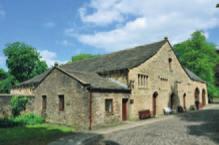
Case study 1: The need for surveying
A large aisled barn in East
Lancashire, dating from 1605,
was undergoing restoration.
The roof structure was in a
poor condition and needed
substantial repairs and
refurbishment. The building
comprised coursed sandstone
rubble with quoins and a
stone-slate roof. Bat roosting
features included wall cavities
and a very large number of
mortice joints in the rafters,
aisle posts and kingpost roof
supports. Bat species found
in the barn included common
and soprano pipistrelle,
brown long-eared and Natterer’s Bats. As part of the preparations for roof repairs, surveys
were undertaken throughout the year in 2009, using a combination of building searches,
remote detectors (every month) and manned surveys (throughout May to September). Bats
were found to be active in all months of the year and the building supported roosting bats in
every month. The information gained will be an essential part of the mitigation strategy.
Case study 2: Mitigation with a bat barn
A former textile mill, built in 1888 in a river
valley in West Yorkshire, was proposed for
development into a series of apartments.
The surrounding landscape is ideal for bats
and includes at least six species. Within
the mill buildings, common and soprano
pipistrelle bats have been recorded during
spring and summer months, with at least
one of the species hibernating in ground
floor door lintels. The buildings also
supported nesting swifts. As part of the
preparation for development a dedicated
bat barn was constructed in 2008 within
100m of the mill, adjacent to woodland and
the river. Subsequent monitoring found bat
droppings in the bat barn in 2010.
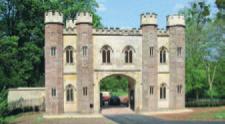
Case study 3: Mitigation in a listed building
Clarkencombe Lodge is a
Grade II* listed gatehouse,
which is part of the Ashton
Court Estate in Bristol.
The lodge was going to
be refurbished to create
residential living space but
the refurbishment needed
to allow for the five species
of bat found on the site to
continue to use the building
and to enhance the maternity
roost. The bat species
included both greater and
lesser horseshoe bats, brown
long-eared, common pipistrelle and barbastelle bats.
Mitigation involved isolating the living accommodation from the designated bat areas,
which included the full roof void. One tower of the gatehouse was also allocated for the bats,
which created a route from the roof to the ground level single storey modern extension, which
was modified to provide roosting ledges and a maternity environment. All windows and doors
were removed from the extension and the building covered with planting. Its interior layout was
designed by a bat consultant. Bespoke entrances and exits were created in the roof and tower.
Canopy cover from the building to the adjacent woodland was ensured. A camera was installed
for ongoing monitoring and this has shown a measured increase in the use of the building by bats
and that the improved maternity roost is in use.
(Photo: Pat Waring/Ecology Services UK Ltd)
(Photo: Pat Waring/Ecology Services UK Ltd)
(Photo: CTT Sustainable Architect)